Morgan Silver Dollar Public Education
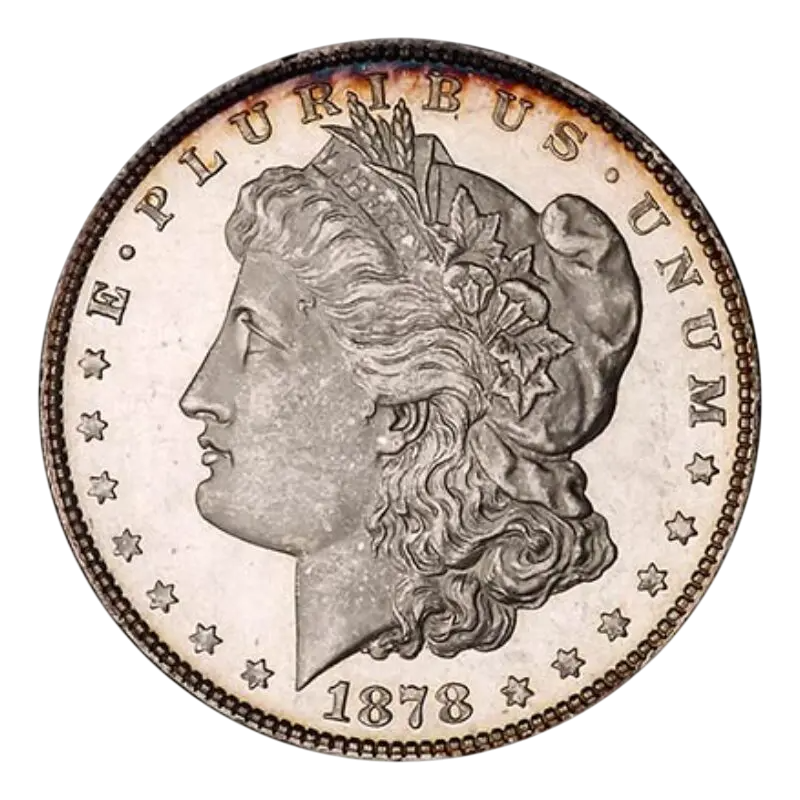
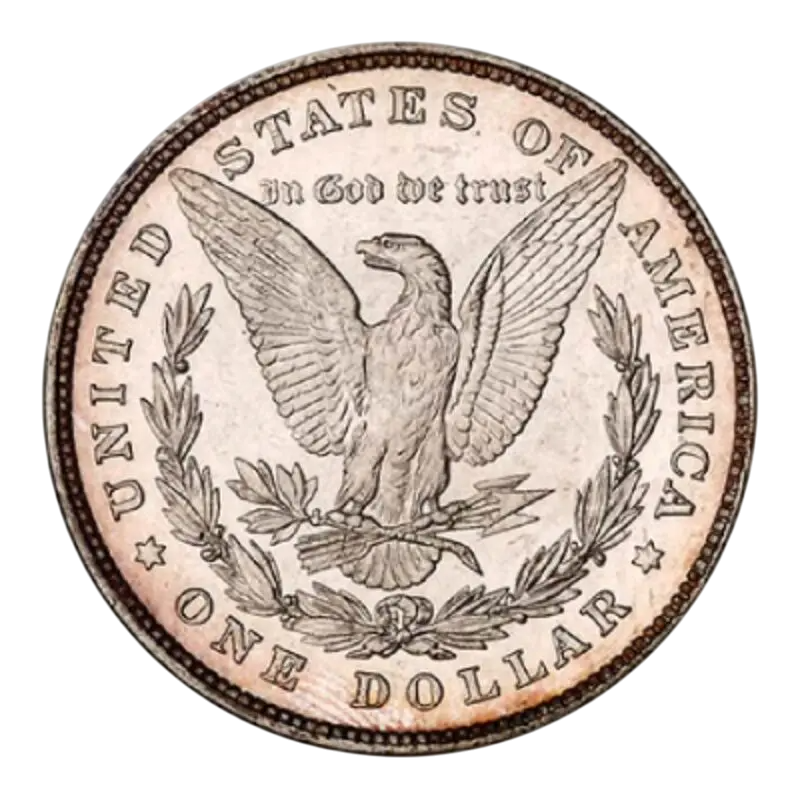
Business strike Morgan Silver Dollars 1878-1921
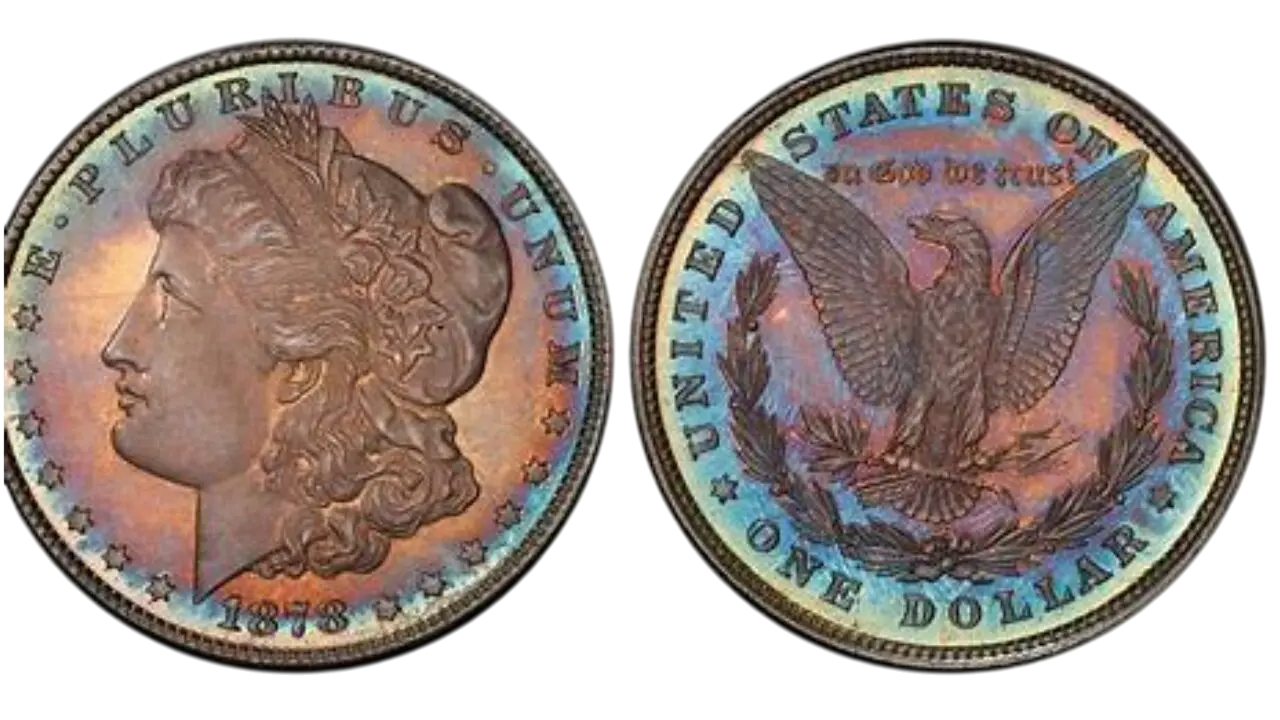
Beautifully Toned Proof 1878 Morgan Silver Dollar (Photo courtesy of PCGS)
U.S. Mint in Philadelphia
Click on the section you wish to learn more about

Morgan Dollar Ways to Collect

Father and son looking at coins together
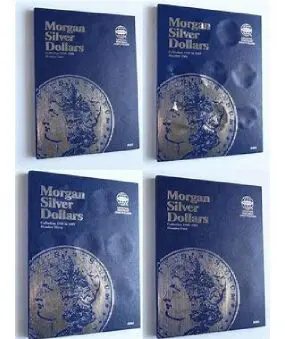
Typical Blue Whitman Coin Collection Folders (Deluxe on left and Regular on right) for Morgan dollars
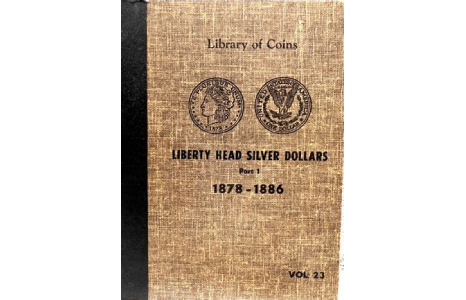
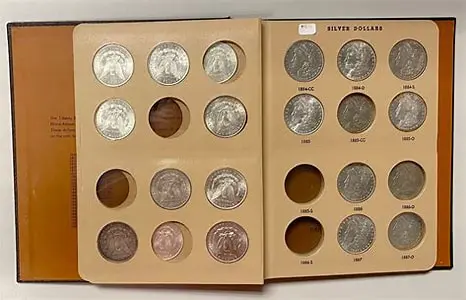
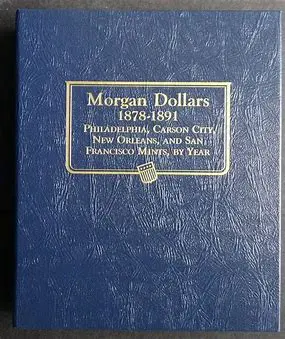
Typical Library of Coins album and Dansco album for Morgan silver dollars
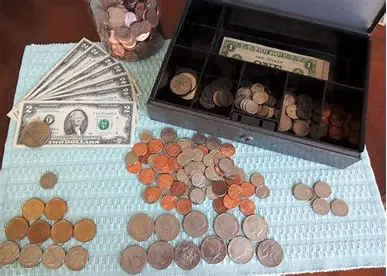
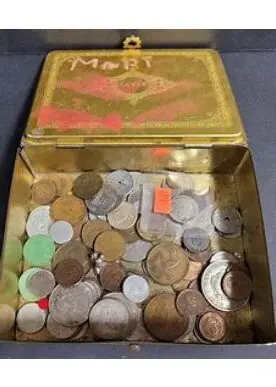
Accumulation of Coins in a jar, a purse, a box, or a drawer
Accumulation vs. Collection
There’s a difference between an organized collection of Morgan silver dollars organized into a coin album by date and mint mark than those accumulated over time because they looked different or were not often encountered. They were stored in a jar, a purse, a box, or a drawer.
Often brand new uncirculated silver dollars from the late 1800s to the early 1900s could be obtained from banks in the 1960s for $1, the face value of a silver dollar at the time. These were often given at birthdays or holidays to children as gifts.
It is more than likely that these silver dollars were obtained from U.S. Treasury releases of bags of silver dollars from the various mints. Chances of finding a rare date/mint mark combination are low. Because mintages of the better-dated Morgan silver dollars were low, it’s likely that the more common dates would be included in these accumulations.

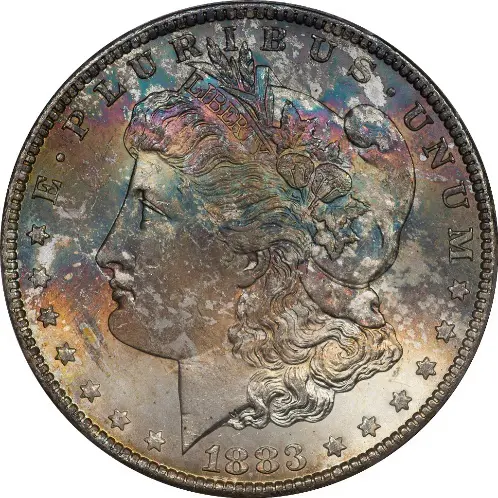
Coin Grading Considerations
It is important to mention that the final arbiter in grading is an agreement between a buyer and a seller, or alternatively, having coins independently authenticated, graded, and certified by an impartial third party such as PCGS, NGC or CAC. Since the cost of grading in many cases is considerable, it is often impractical and a waste of money (a minimum of $20 and up, depending on the estimated value of your coin) to have your coins certified. A good general rule: Unless your coin is in the $300 price range, spending about 10% of its value on grading may not be warranted. Many silver dollars fit into this lesser-value category.
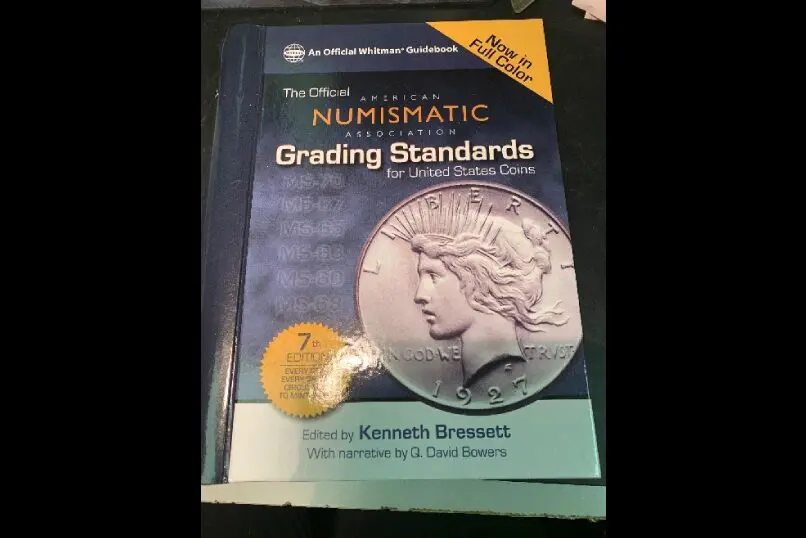
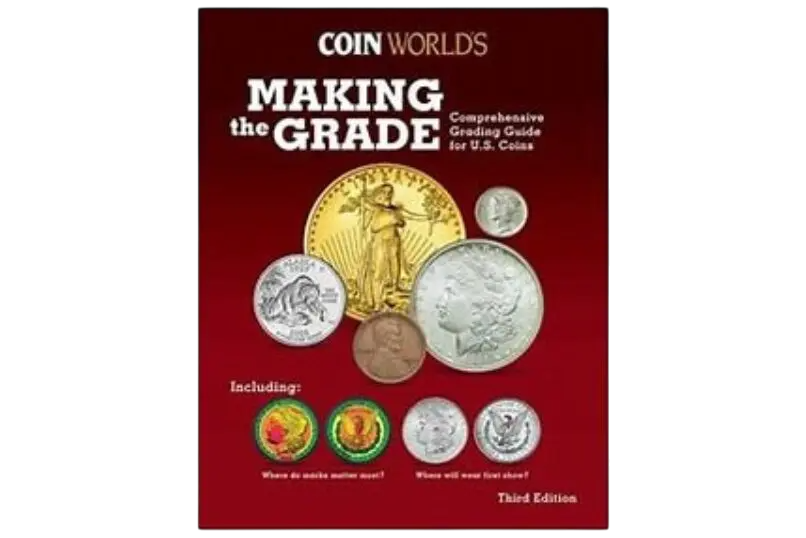
There are many resources you can use to build your grading skills. The Official American Numismatic Association Grading Standards for United States Coins, edited by Ken Bressett (Whitman Publishing, LLC) is one of the best. Coin World’s Making the Grade (Amos Press, Inc.) is another good reference with numerous illustrations.
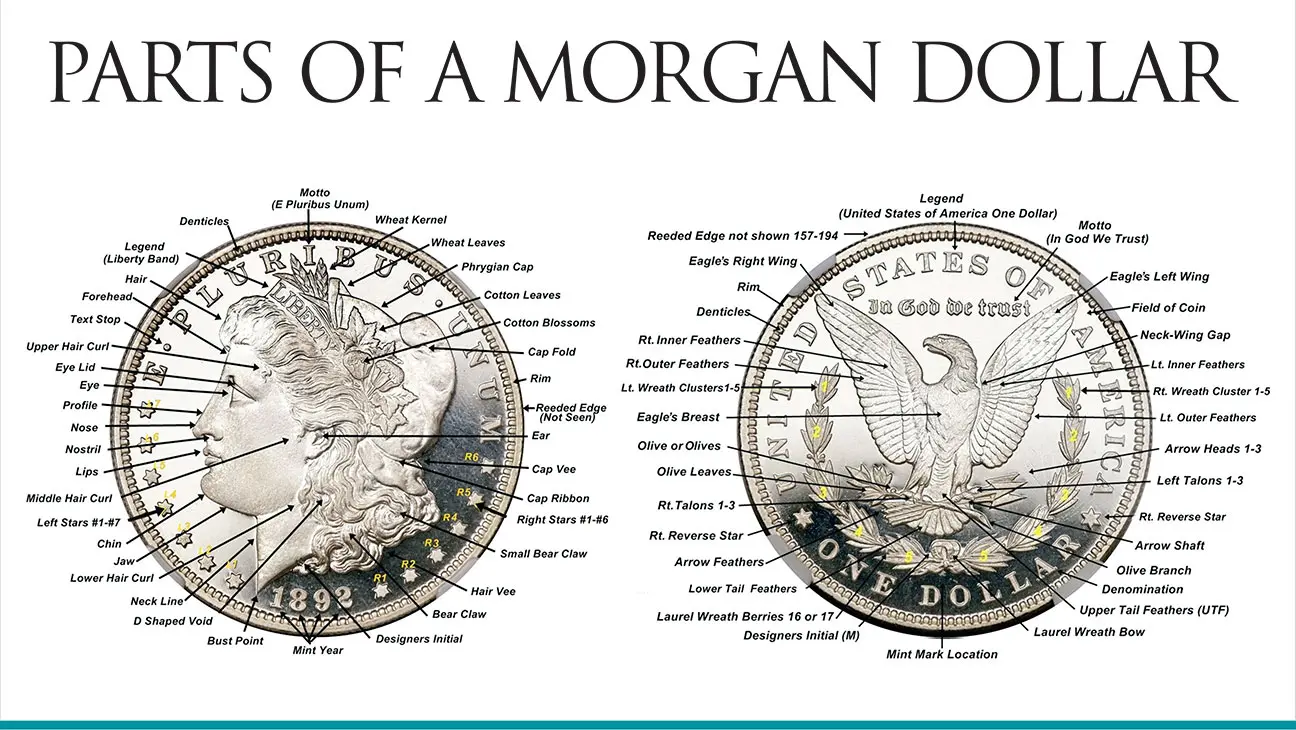
Grading criteria
Perhaps the best advice I can give you first is DO NOT EVER CLEAN YOUR COINS!
Morgan dollars were minted between 1878 and 1921. Coin dealers and collectors can easily spot attempts to clean old coins to make them look better. These clues include, but are not limited to hairline scratches, residue from cleaning agents, eraser marks and unnatural-looking bright spots, or broken luster affecting the reflective quality or sheen on a coin’s flat areas (fields) that are produced during the minting process.
The five main factors taken into account when assigning a mint state or uncirculated grade include:
Careful Storage
People often end up dealing with a jar, purse, box, or drawer full of coins collected by a relative. They may be taped to cardboard, sorted into sandwich bags, stored in soft flips or remain loose and take on more contact marks when moved. These are fine for storing low-value silver dollars that might sell for near silver value, but could cause damage to more valuable silver dollars you may have.

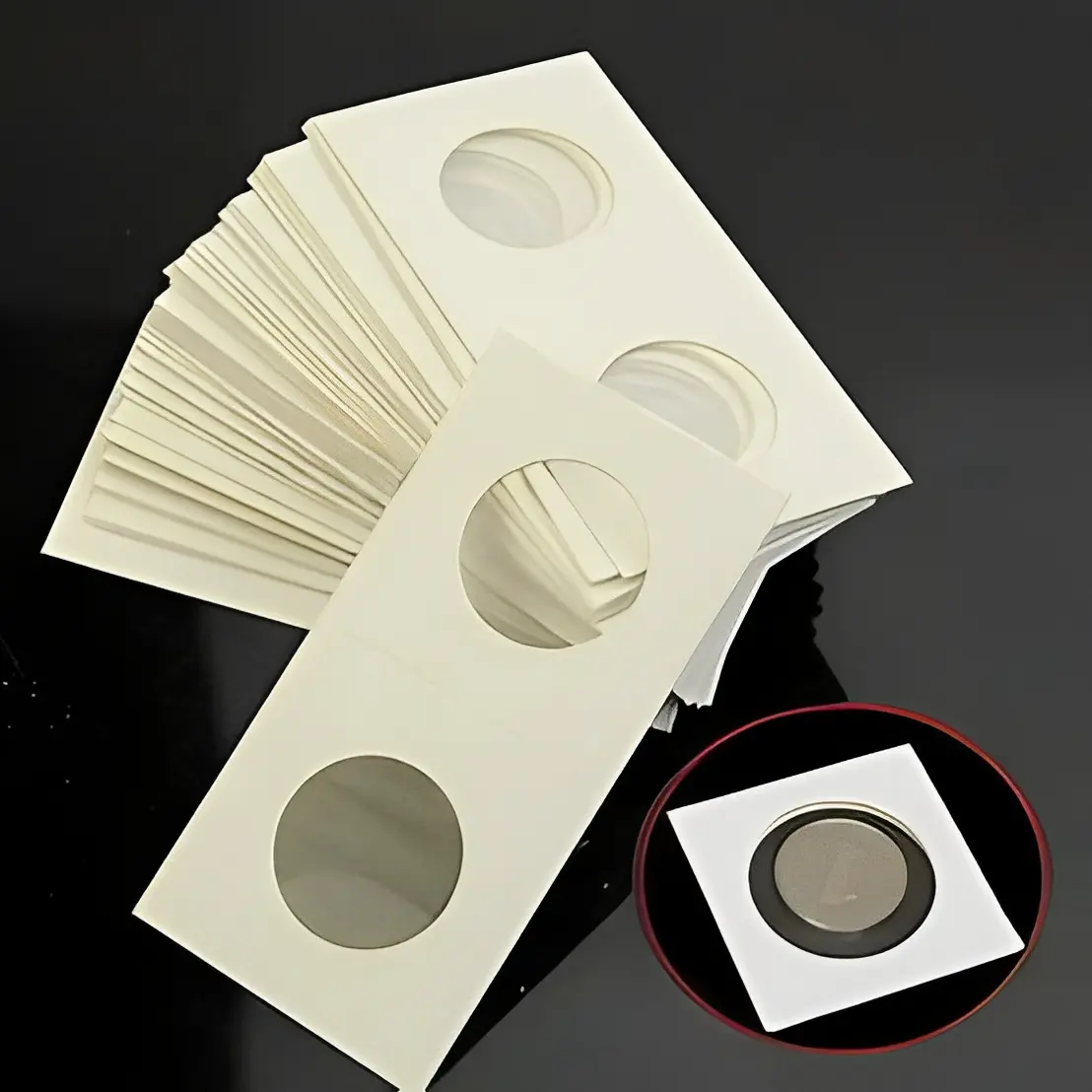
2”x2” coin flips w/Mylar windows
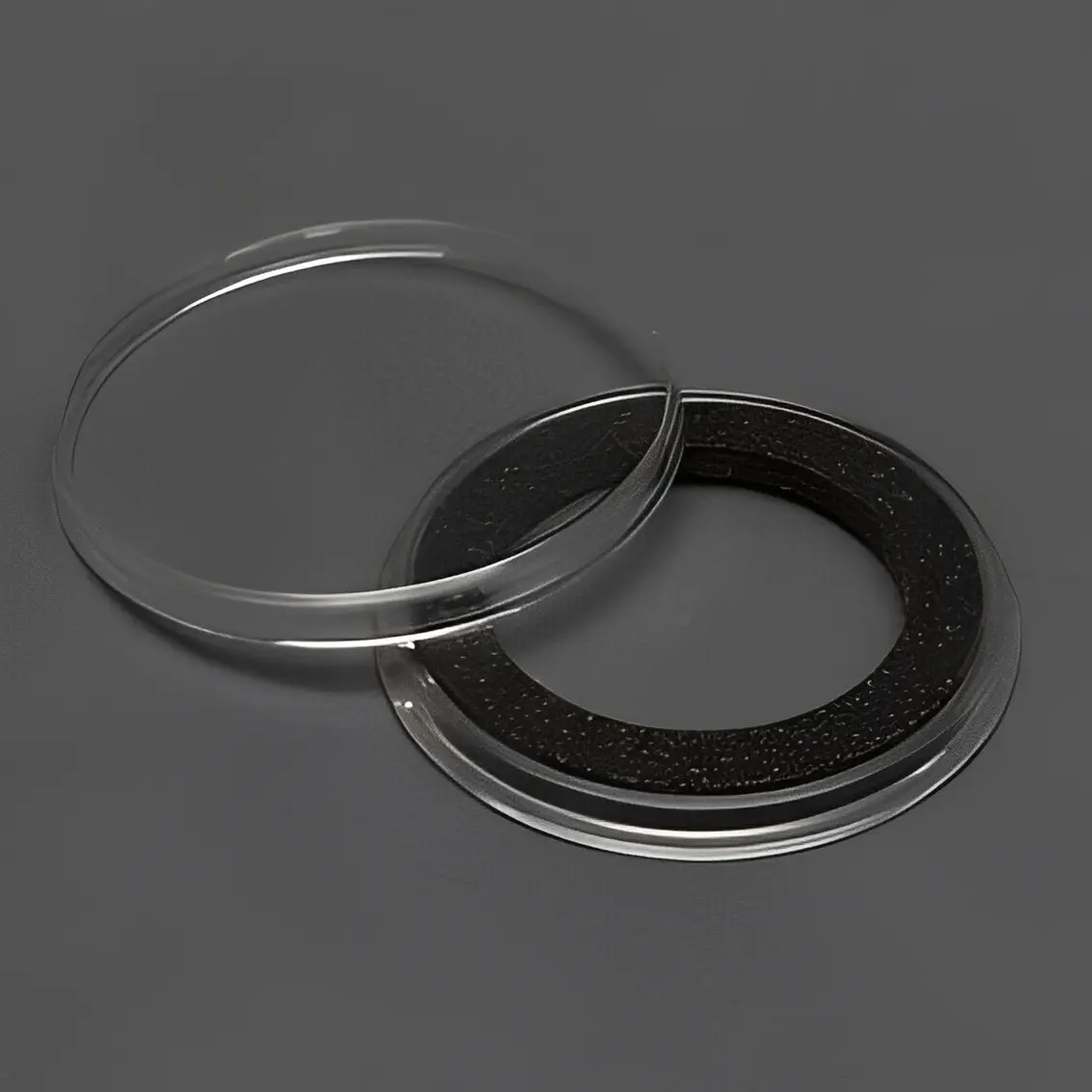
AirtightTM plastic coin holder
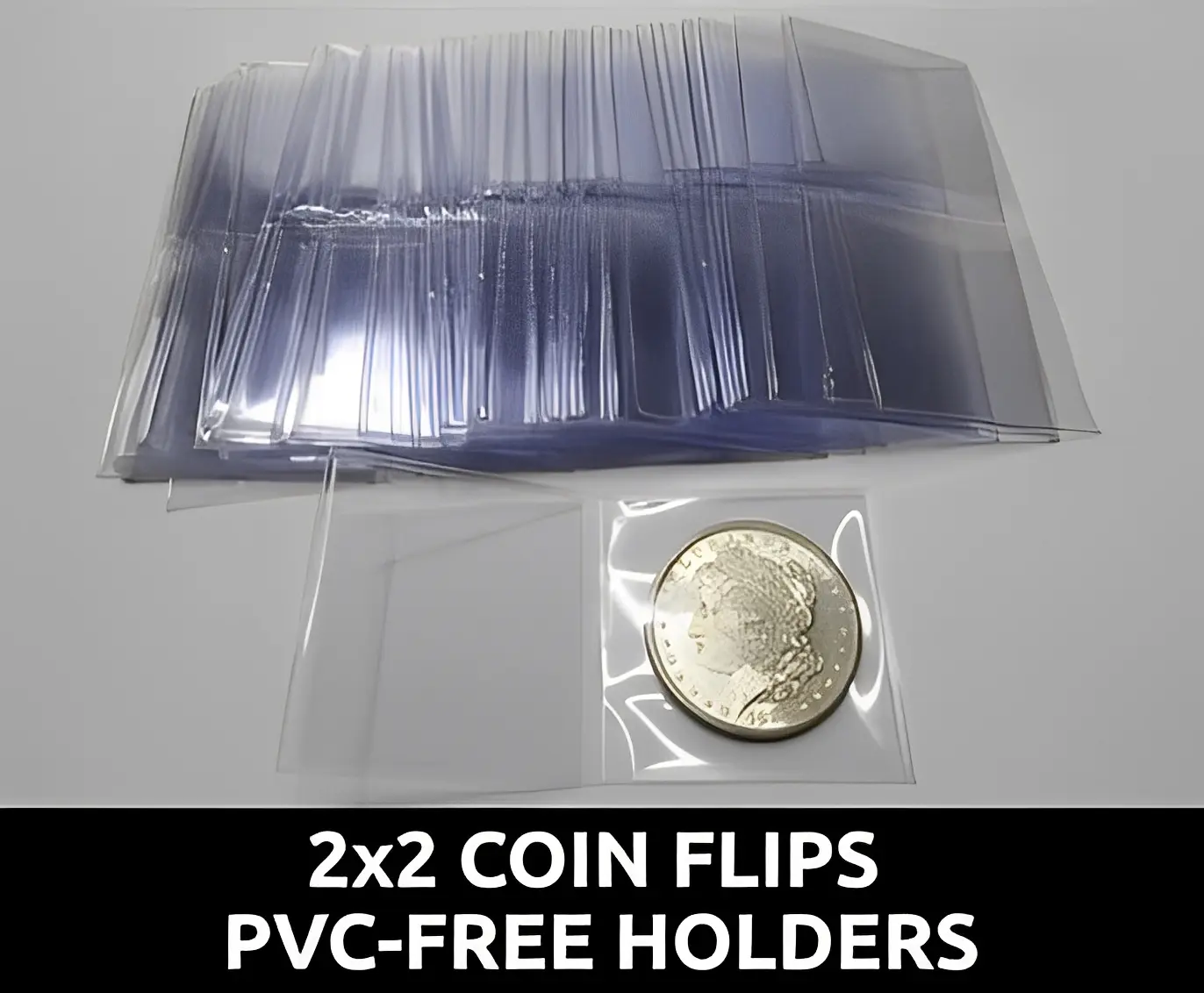
Hard 2”x2” flip (must be PVC free)
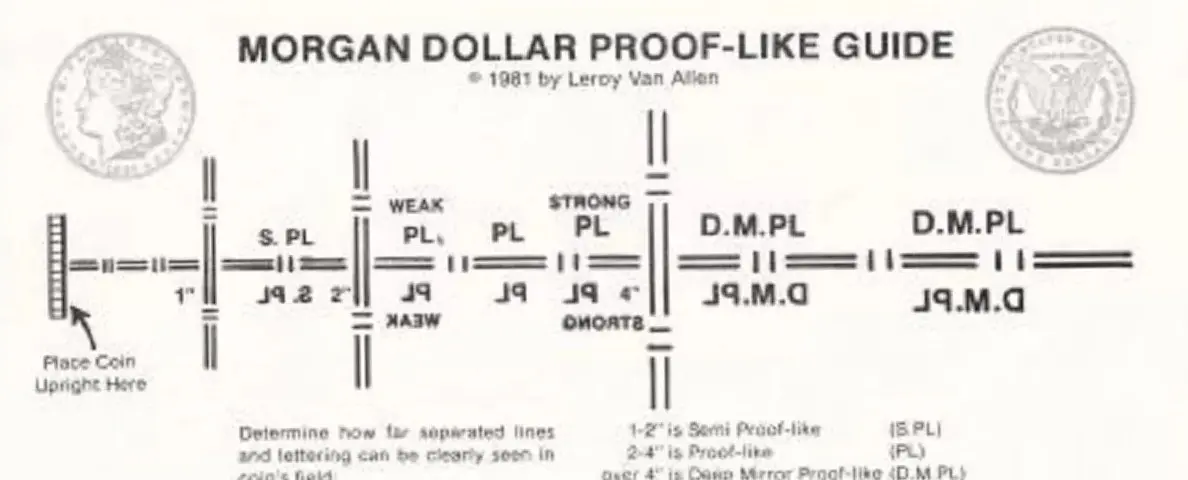
Morgan Dollar Proof-like (PL) and Deep Mirror Proof-like (DMPL) Die States
Populations of PL/DMPL coins
Leroy Van Allen Morgan Dollar PF/DMPL Guide
Proof coins, proof-like, deep mirror proof-like coins — as well as experimental pattern coins and proofs struck at branch mints rather than Philadelphia — are all graded on the same scale as business strikes, except the criteria are slightly different. (And note: Proof (PF), PL, DMPL are not grades, but used as descriptors to reflect the way the coins were manufactured.)
The Evolution of Coin Dies
Freshly basined (polished) mint dies have highly reflective fields which produce coins with mirror-like surfaces. This is considered an Early Die State (EDS). As minting continues, the metal dies under extreme pressure, press against metal silver planchets such that the fields of each die becomes a little more defaced. Perhaps the first few hundred coins struck from fresh dies produce DMPL coins, which upon subsequent strikes of a few thousand coins, result in PL coins. Thereafter coins have a satiny appearance in the fields often referred to as Mid Die States (MDS) which progresses to a Late Die State called "orange peel", that resembles the surface of an orange. Very Late Die States (VLDS) can show extensive diagnostic die cracks, die chips, and even die breaks and cuds raised on the surface of the coin (the opposite of image of the die).
PL and DMPL business strikes are graded mostly by the number and severity of hairlines picked up by the delicate mirrors, perhaps from contact with a tabletop or coin album slide or being even lightly wiped with tissue or a cloth.
Valuing PL and DMPL Coins
Proof-like silver dollars are scarce, and deep mirror prooflike silver dollars are even rarer. They are most prevalent in San Francisco strikes from 1879 to 1882 which used many different die pairs and repolished some of the dies during minting. Although more common PLs and DMPLs command a significant premium over common dollars, better dates and grades should be considered for authentication, grading and certification, especially those whose value exceeds the $300 threshold. Better dates with fewer PL/DMPL dollars known or certified command higher numismatic premiums.
Though modern proof coins may garner an MS-70 or Proof-70 grade, older coins — those 100 years old or older — are generally not graded higher than MS-68/PF-68, with MS-65-67/PF-65-67 being considered Gems. (Excerpts from A Virtual Guide to Pricing Your Silver Dollars By Michael S. Fey, Ph.D.)
PL/DMPL populations of Morgan dollars at NGC is given at Morgan Dollars (1878-1921) | Coin Census Population Report | NGC. Retail prices for PL/DMPL Morgan dollars are given at Morgan Dollars (1878-1921) | Price Guide & Values | NGC. PL/DMPL populations of Morgan dollars at PCGS is given at Morgan Dollar - PCGS Population Report. Retail prices for PL/DMPL Morgan dollars are given at Morgan Dollar (1878-1921) Values - PCGS Price Guide.
Morgan Dollar Proofs, Specimens & Patterns
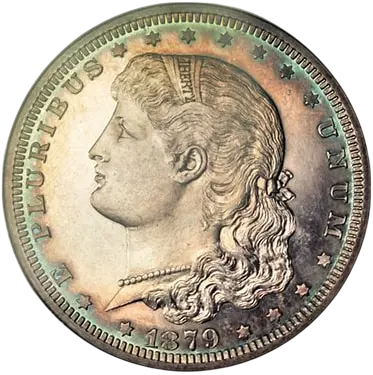
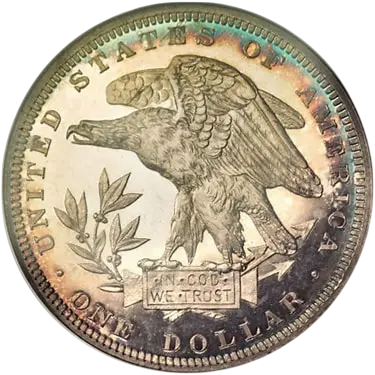
One of the most beautiful Morgan Dollar Patterns, the 1879 Schoolgirl Pattern
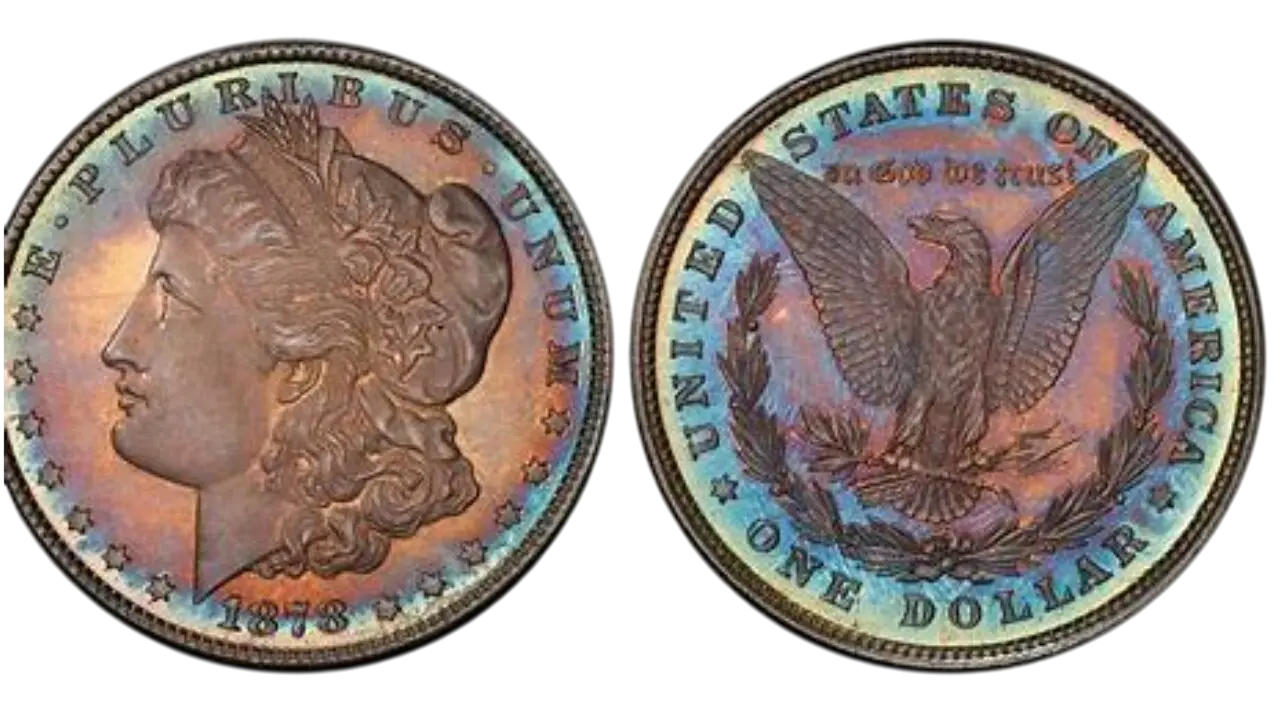
Beautifully toned 1878 8 Tail Feather Proof (Photo Courtesy of PCGS)
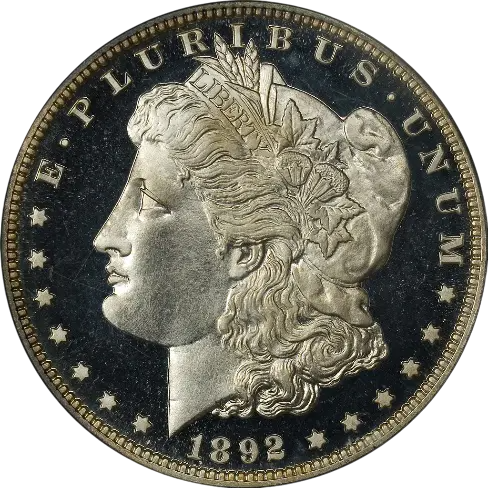
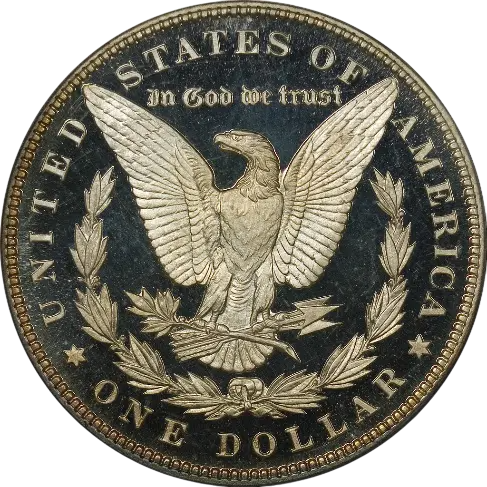
Beautiful Black and White Cameo 1892 Morgan Dollar Proof (Photo Courtesy of PCGS)
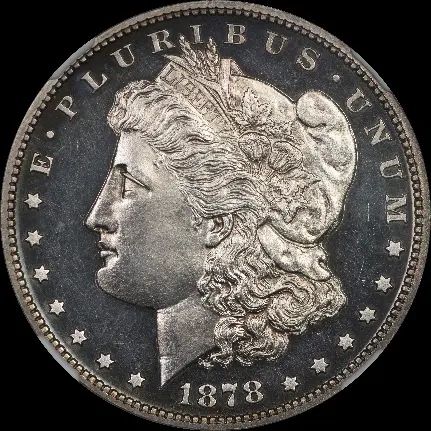
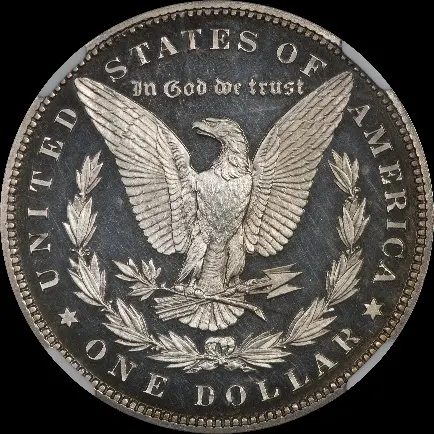
The rarest Morgan dollar Proof, the 1878 7 Tail Feather Reverse of 1879 (Photo courtesy of DLRC Auctions)
Starting December 5, 1877, several silver dollar pattern dollar designs using copper and silver planchet were sent by George Morgan and Charles Barber to Henry Linderman, U.S. Mint Director. More designs were later sent and/or altered. On Febraury 28, 1878 Congress passed the Bland-Allison Silver Dollar Bill, shortly thereafter he authorized James Pollock, Superintendent of the Philadelphia Mint to strike the Morgan dollar design. Congress mandated striking 1 million coins per month. (A detailed account is given by Van Allen and Mallis in Comprehensive Catalog and Encyclopedia of Morgan & Peace Dollars, 5th ed.)
The 1878 Morgan dollar, VAM 9, was the first variety minted. President Rutherford B. Hayes and Secretary of the Treasury, John Sherman, expressed to Linderman to possess the first and second struck Morgan dollar. Pete Bishal, a recently deceased numismatist was the first to discover the "Hayes specimen", along with it’s accompanying certificate and envelope as a Van Allen Mallis (VAM) 1878 8TF VAM 9,the First Morgan dollar variety struck. It is a rare and desirable coin now listed in the Top 100 Morgan dollar Varieties: The VAM Keys book by Michael S. Fey and Jeff Oxman.
Although proofs and patterns were never intended for circulation, some have found their way into circulation over the years. These can be graded on a scale of PF-1 to PF-58, much the same way business strikes are graded — on the number and severity of hairlines picked up on their delicate mirror surfaces.
If you believe your coin is a mishandled proof or pattern, it’s best to get several opinions from professional numismatists and then a determination from a grading service such as NGC, PCGS, or CAC.
Though modern proof or pattern coins may garner Proof-70 grade, older coins — those 100 years old or older — are generally not graded higher than PF-68-69 with PF-65-67 being considered Gems. (Excerpts from A Virtual Guide to Pricing Your Silver Dollars By Michael S. FEY, Ph.D.)
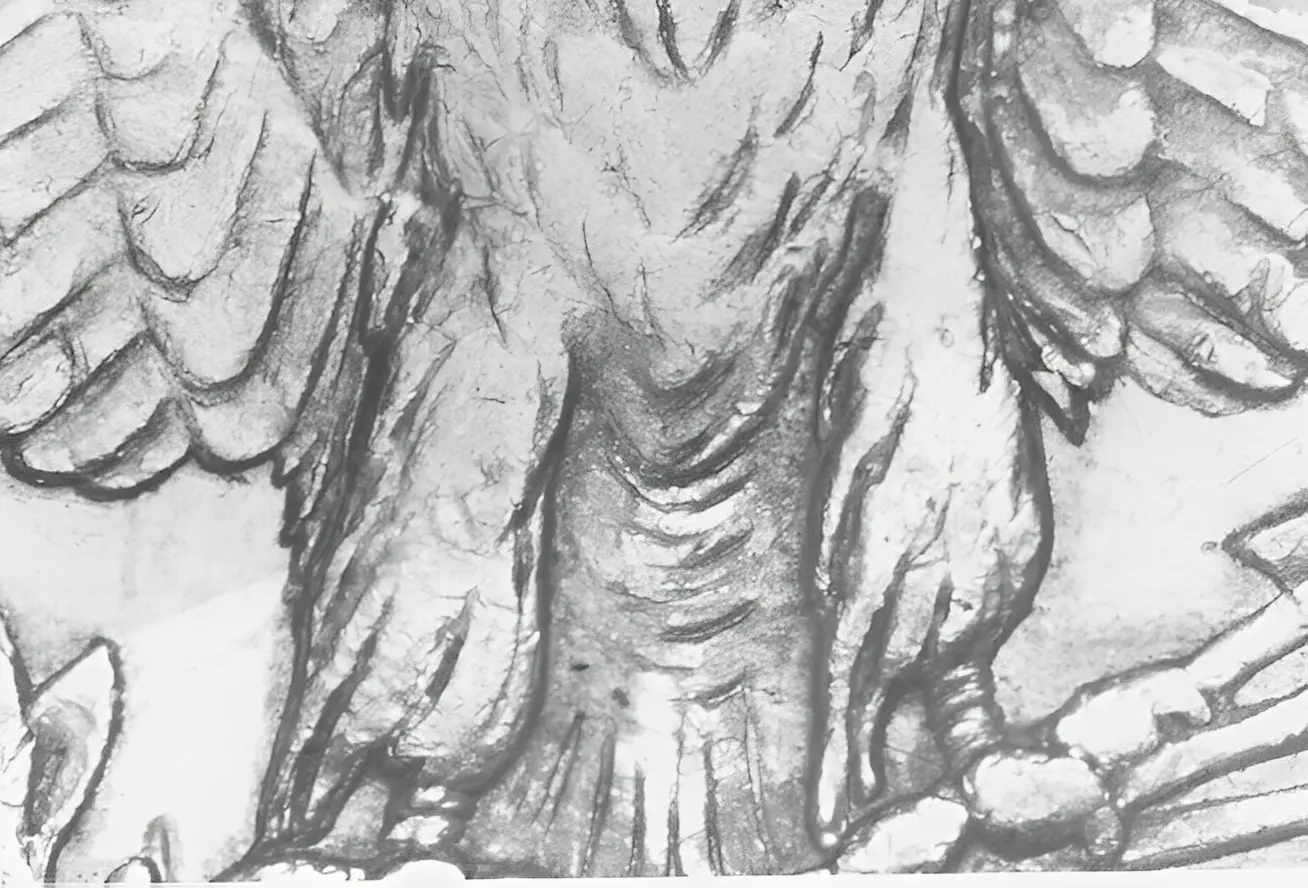
1878 8TF VAM 9 showing pin feathers between the right and left wing/leg junction
Rarest Morgan Dollar Proofs
The three rarest Morgan dollar proofs are the 1878 Reverse of 1879, the 1878 8TF Morgan dollar VAM 9, the First Morgan dollar variety struck, and the 1921 Chapman Proof. These proofs may be valued at $20,000 or more in lower grades of Proof-60, but can easily trade in the hundreds of thousands of dollars in higher proof grades. The 1895 Proof is especially desirable and valuable because it is the only date available to complete a date set of Morgan dollars. All 1895 business strikes are thought to be melted, leaving the proof with a small mintage of only 880 coins available, some of which were likely lost or melted over time. Care must be taken as there are more counterfeit, altered or copied 1895 Morgan dollars than genuine articles. Certification is mandatory.
Morgan dollar proofs with cameo and deep cameo contrast certification or beautiful toning can trade for many multiples of common proofs prices. Certification by a reputable grading and service is highly recommended.
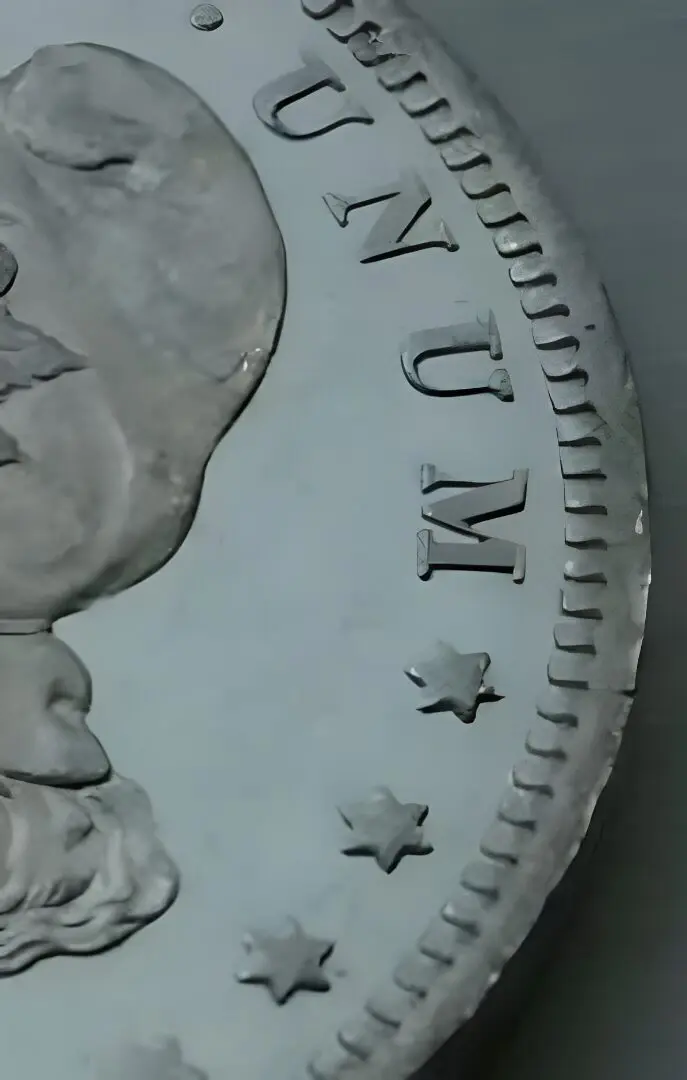
Morgan dollar proof showing sharp square edges on the rims
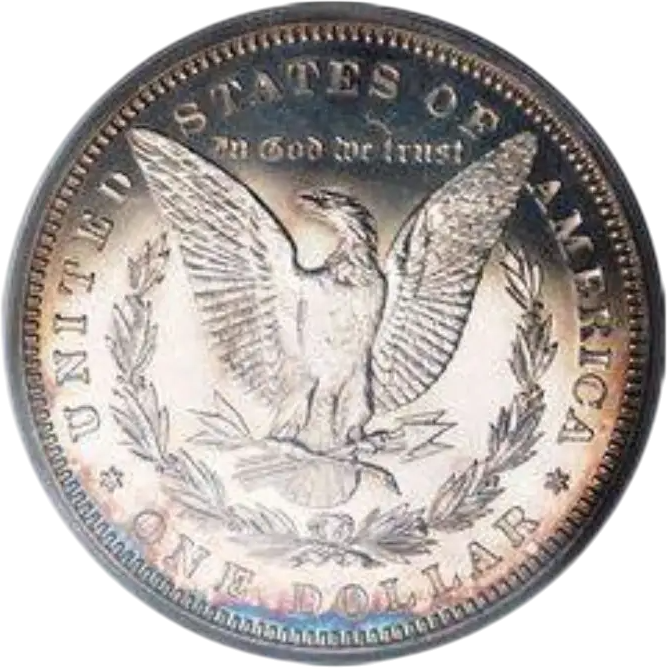
1878 7 Tail feather Judd-1550a--Note different leaves on the branch
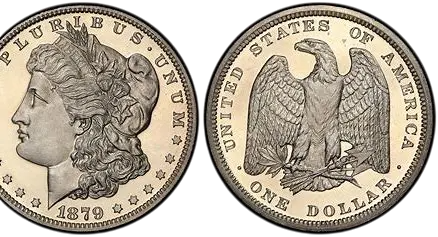
1879 Judd-1611 silver dollar Pattern
The Making of Proof Coins
Proof dollars and patterns were made specially for collectors. They were made in a different area of the mint where business strikes took place. Proof mintages were often 1000 coins or less in any year. Specially polished planchets were carefully handled individually by hand and struck more than once with highly polished dies under much higher pressure than business strikes. They were then carefully handled so as not to cause any contact marks, wrapped carefully in tissue paper, and placed into a box for shipping.
Over the years, collectors or descendants might wipe the silver dollars with the enclosed tissue paper in the original shipping box, thus causing hairlines in the delicate mirror-like fields. Proofs dollars that were not circulated, but had extensive hairlines might grade Proof-60, whereas Proof Dollars in gem condition might have few, if any, hairlines from wiping or mishandling.
Proof silver dollars can be distinguished from business strike coins by having sharp squared edges on the rims (as opposed to rounded rims on business strikes), deeply mirrored fields, and an especially sharp strike.
Over the years of striking Morgan silver dollars from 1878 to 1921, several branch mint proofs and special striking took place to commemorate a special event. The most documented special strike is the 1878 8TF VAM 9. It is mentioned as one of 9 "Presentation Pieces" given to dignitaries at a ceremony to launch the Morgan dollar at 3:17 PM on March 11, 1878 in Philadelphia (March 12, 1878 Chicago Daily Tribune). Branch mint proofs certified include: 1879-O, 1881-O, 1883-O, 1883-CC, 1885-CC, and 1893-CC. Certified "Specimens" include: 1878-S, 1880-O, 1882-CC, 1887-O, 1896-O, 1921, 1921-P, 1921 D, 1921-S.
Examples of early Morgan pattern silver dollars are displayed above, but numerous silver dollar patterns were struck yearly through 1877-1921. All are RARE and valuable! It is beyond the scope of this website to illustrate them. A detail and illustrated account is given by Andrew W. Pollock III in his book United States Patterns and Related Issues, 1994, published by Bowers and Merena Galleries, Inc., Wolfeboro, NH. Another excellent reference is given by J. Hewitt Judd, M.D., 2003. United States Pattern Coins Experimental and Trial Pieces-America Rarest Coins., Whitman Publishing, LLC, Atlanta, GA.
Morgan and Peace Dollar Provenance-Famous Hoards & Pedigrees
The Value of a Coin's Story
Silver dollars that have an interesting story, a special provenance, can be worth an additional premium. Coins that were once part of the holdings of famous collectors such as coin dealer John W. Haseltine, Baltimore financier Louis Eliasberg, diplomat R. Henry Norweb and his wife Emery, collector and numismatic writer Farran Zerbe, and world-class collector John Pittman all command additional premiums because they are part of numismatic history.
Perhaps your collection includes a silver dollar that was part of a noted hoard, like that left behind in Ted Binion’s bunker.
On Sept. 17, 1998, Ted Binion, owner of Las Vegas’s Horseshoe Casino, was found dead from a suspected heroin overdose. He had a bunker containing about 110,000 silver dollars that had been used in slot machines from the 1950s forward. The hoard was purchased by a dealer who had them specially certified by NGC as part of the Binion collection, and in 2002, Teletrade, an internet auction company, auctioned many of them packaged in NGC special green-labeled holders bearing the “Binion Collection.” name.

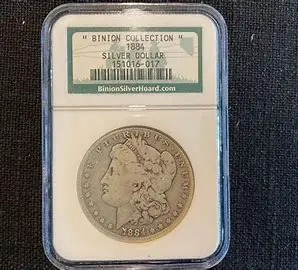
Example of Holders for Redfield silver dollars (left) and green NGC Certified Binion Collection silver dollars
Morgan and Peace Dollar Government Services Administration (GSA Releases)

NGC Certified example of a Government Services Administration (GSA) 1881 CC GSA Hoard coin in a hard plastic holder
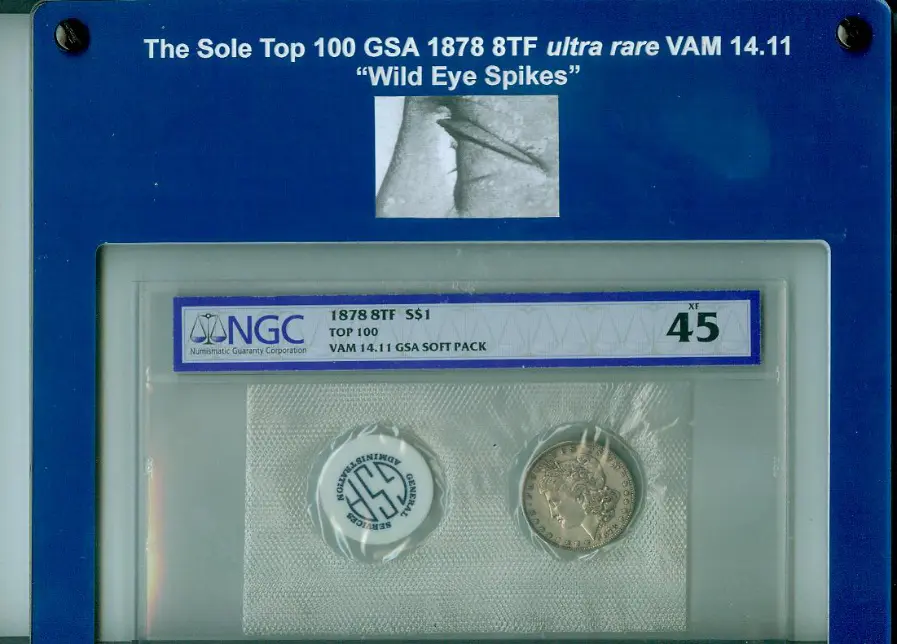
Example of a rare NGC Certified 1878 8 Tail Feather Top 100 VAM 14.11 in a GSA soft pliobag holder certified by NGC.
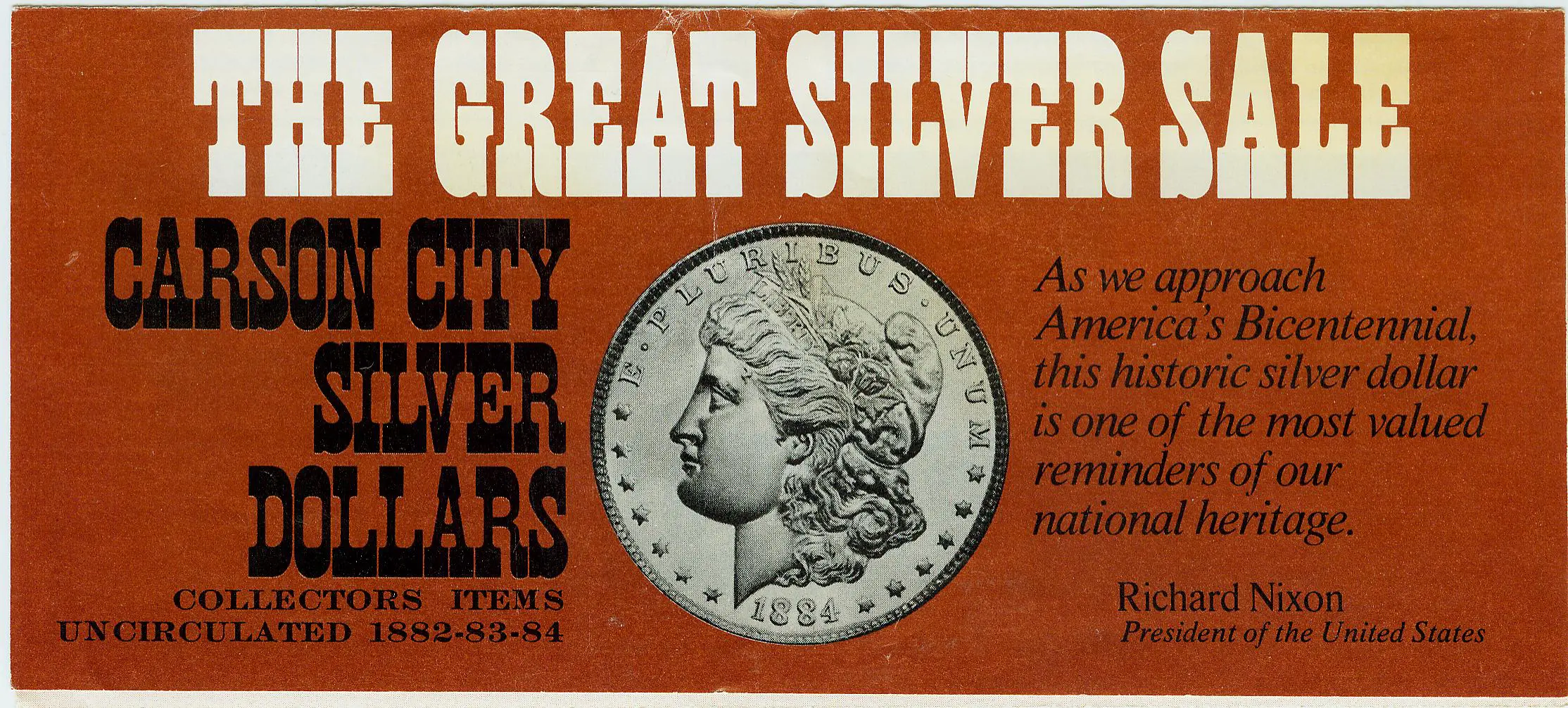
In the 1970s and ’80s, these Government Services Administration (GSA) holdings were sold to the public in hard, see-though plastic holders or soft, pliobag plastic holders.
Collecting GSA Hard Packs
Examples of hard plastic packs include the desirable Carson City (CC) mint marked coins as well as non-CC coins. These always command a numismatic premium. To determine whether you should pay to have your hard-pack GSA coin graded/certified by NGC or PCGS, consider the grade and value (is it worth more than $300) and the rarity of its date, mintmark and/or die variety.
The soft pliobag example shown here is an ultra rare 1878 8TF (eight tail feather) VAM 14.11 variety, the only one known in a GSA holder and worth a huge numismatic premium. The cost of certification was well worth the cost. If you have any GSA coins, do not remove them from their original holder. Keep the original boxes, papers and envelopes that came with it, as they have historic and numismatic value as well.
A detailed account of the GSA dollars by dates, mint marks dates released and numbers is given by Van Allen and Mallis 5th edition, Part I (2021) in their Comprehensive Catalog and Encyclopedia of Morgan & Peace Dollars ((Rare Coin Investments (RCI), Ironia, NJ 07945)).

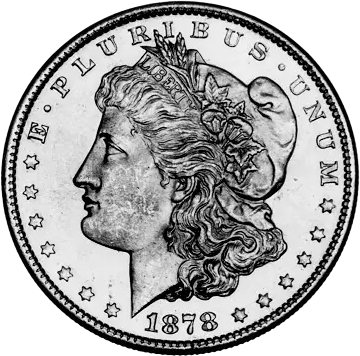
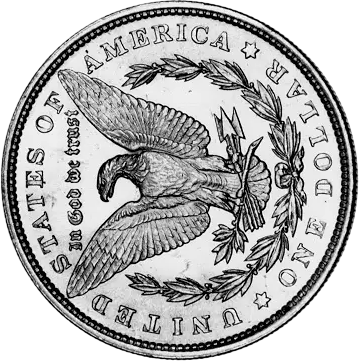
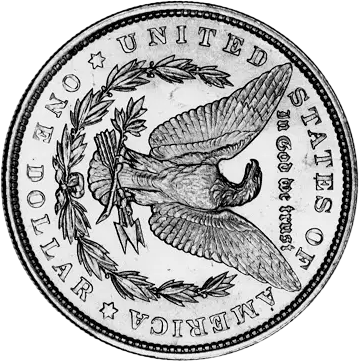
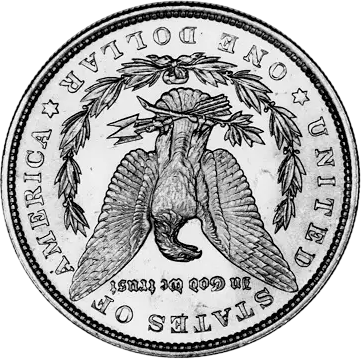
Some examples of rotated dies vs a normal 180 degree orientation (top and bottom) when flipped side to side.
Morgan Dollar Rotated Dies
Identifying Rotated Dies
Rotated dies: These are easy to spot if you flip the coin from top to bottom. The image of the eagle should be upright. If the Eagle is rotated clockwise to the right, or counterclockwise to the left by more than 15 degrees (normal mint tolerance), you have a scarce to rare rotated die. Rotated dies become quite valuable in mint state and with some circulated dates. The greater than degree of rotation, the higher the value of the coin with coins at 90 degree and 10 degrees having high visual appeal, although rotations can exist at any degrees.
Morgan Dollars, known to have rotated dies:
A detailed account is given by Fey (2008), A Decade of Top 100 Insights, Rare Coin Investments (RCI), Ironia, NJ
Morgan Dollar Errors
Millions of coins were struck at the U.S. Mints at Philadelphia, San Francisco, Carson City, New Orleans and Denver, and some were bound to be struck in error, perhaps because of a machine breakdown or a machine setting out of place (too little pressure, too much pressure, etc.)
Though each error coin is unique, the general type of error can be used to classify them and provides a basis for valuation. Search online or at ebay.com for coins at a comparable grade with the same type of error to get an idea of what your coin is worth, though certification by an independent authentication and grading service is recommended.
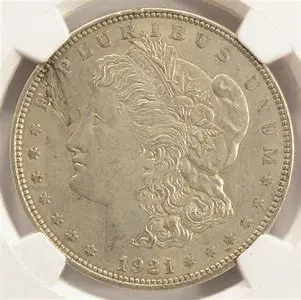
1921 Morgan dollar with obverse lamination (upper left)
Kinds of minting errors
Laminations
In some cases, the metal in coin blanks was improperly alloyed, causing pieces of metal to flake or peel off a coin’s surface. These are called laminations, and areas under them are typically rough. Unless the lamination is large, the coin would not be worth certifying, though it may be worth a small premium to an error collector.
Planchet Errors
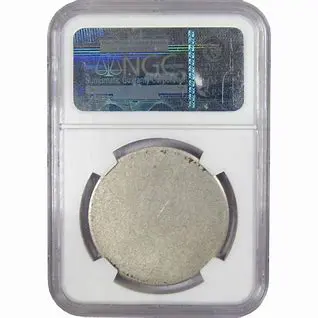

Example of an NGC Type I planchet error (left) and a PCGS Type 2
A flat silver dollar blank was processed through an upsetting machine or upset mill, where its rim was formed, turning it into a planchet ready for coining. Type 1 planchet errors appear as blanks that are the size of a silver dollar but lack a raised rim. Type 2 errors are planchets (with a raised rim) that are unstruck. Both are worth a premium as errors and are worth sending to NGC or PCGS for authentication, certification and grading.
Overlapped Reeding
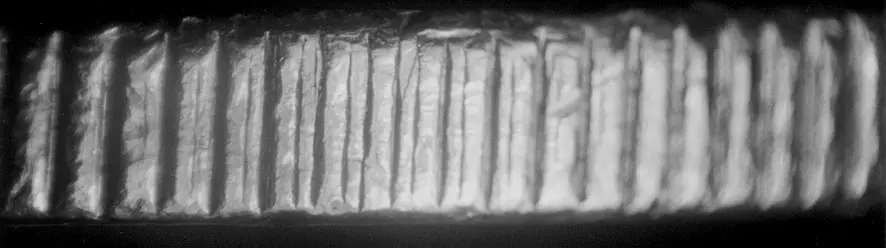
Example of overlapping reeding (note split reeds)
This is a fairly recent discovery on some New Orleans-minted dollars and 1921 business strikes. At the same time the obverse and reverse dies stamped their designs into a planchet, a separate collar formed the reeding around the edge of a Morgan silver dollar. The Mint equipment that cut reeds into the collars was allowed to cut too long or was repositioned during cutting, resulting in collars that struck coins with overlapping reeding (or “double reeds”) on one — or up to four — areas along their edge.
Striking Errors
Die Adjustment Pieces
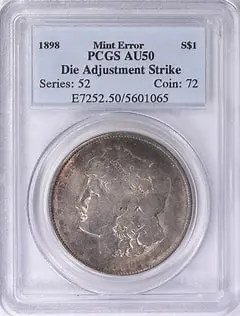
Rare PCGS Morgan dollar Die Adjustment Strike
Planchets were used to make test pieces during setup while striking pressure was adjusted to get coins with the desired detail. If the pressure was set too low, the coins’ detail was weak, but more importantly, the pressure was too weak to impart the reeding from the collar that held the coin to an exact silver dollar size. These coins lack detail on parts of the obverse and reverse, but also weak reeding, making them rare die adjustment pieces that command a high premium. These should definitely be certified by a reputable grading service.
Misaligned Die
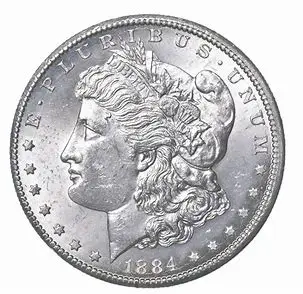
Example of a Misaligned obverse Morgan dollar(note thickness on right rim)
This is another type of adjustment piece, where the obverse and reverse dies are not perfectly aligned top to bottom. If one die is off-center, you might see the design on one side of the coin looking a little off-center. However, it is not so far off-center that the lettering nearest the rim is affected.
Rotated Dies
(See Rotated Dies Section) These are easy to spot if you flip the coin from top to bottom. The image of the eagle should be upright. If the Eagle is rotated clockwise to the right, or counterclockwise to the left by more than 15 degrees (normal mint tolerance), you have a scarce to rare rotated die. Rotated dies become quite valuable in mint state and with some circulated dates. The greater than degree of rotation, the higher the value of the coin with coins at 90 degree and 10 degrees having high visual appeal, although rotations can exist at any degrees.
A detailed account is given by Fey (2008), A Decade of Top 100 Insights, Rare Coin Investments (RCI), Ironia, NJ
Strike Through
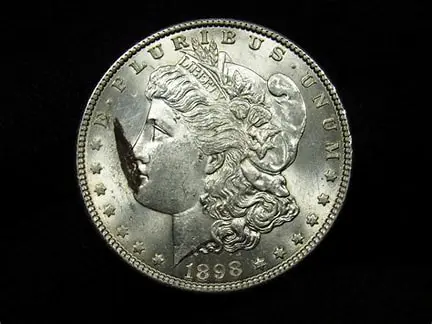
Example of a Morgan dollar struck thru slag.
During the minting process, objects or substances — wire, wood, cloth from a Mint bag, metal scrap, grease, etc. — may have landed between the planchet and dies and gotten “struck into and through” the planchet. Unless large and very noticeable on mint state coins, they do not command a huge premium, but may be worth the cost of certification.
Struck Through Grease
Die adjustment pieces should not be confused with coins accidentally struck through grease, which have parts of the silver dollar design missing but always have strongly struck reeds at the edge. This more common error does not command a huge premium, but may be worth sending to the grading service if the affected area is large and quite easily noticeable and the coin is in a high grade, perhaps AU or better.
Split Planchet
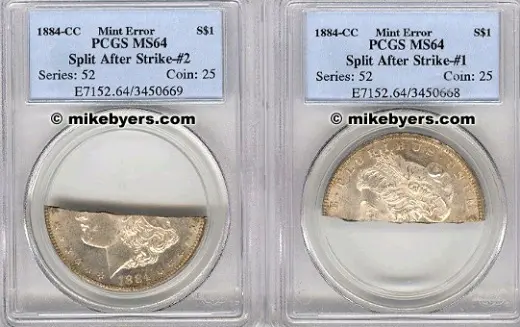
Photo courtesy of Mike Buyers.com
This occurs when a coin is struck on a planchet that is already partially split. A complete break in the planchet can be seen on both sides of the dollar. If the planchet breaks completely in two, it is called a split planchet. These are very rare and worthy of a high numismatic premium.
Struck Through Slag
On some silver dollars, an unappealing black streak can be seen on the coin’s surface. That black substance is a metal contaminant, or slag, and almost always detracts from the coin’s value.
Clips

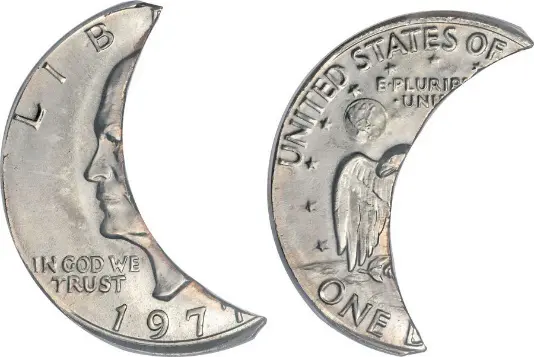
Minor Curved clip on a 1921 Morgan dollar (left) Major curved clip on an Eisenhower dollar
Clips occur when planches are stamped out and are out of center. There are straight clips, ragged clips, and curved clips. Minor clips do not command a large numismatic premium. However, big clips, or multiple clips, especially on larger coins like silver dollars can command a heavy premium.
Partial Collar
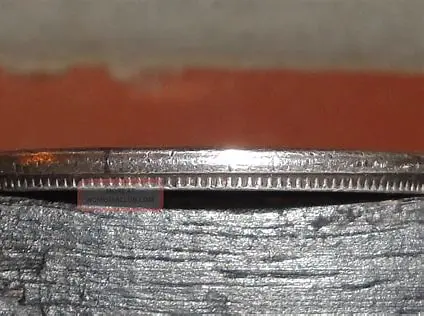
Example of a Morgan Dollar with a straight partial collar (aka railroad rim)
The edge on a Morgan dollar (the “third side of the coin”) is formed by the collar, which imparts the reeding. If the coin is out of position in the collar, it can form what looks like a railroad track, with a smooth “rail” all the way around a portion of the edge and a truncated “track” (reeding) around the rest, either straight or tilted. This is described as a partial collar or a tilted collar. These coins command premiums and should be certified.
Mechanical (Strike) Doubling
This type of doubling, a mistake that occurs during the minting process, is often confused with die doubling, which is caused by a defective die — one that bears a double design image. It does not command any premium. If the dies are not tight in the press, there’s a chance the die can move a little in one direction as the coin is struck. This results in a slight doubling of many features in one direction, the direction of the die movement. It can be distinguished from die doubling in that it often appears as a shadow of the original date, mintmark, letters or portrait; it occurs in one direction; there is no split serif seen at the very edges of letters or numbers as you see in die doubling; and the doubling is always lower in the field. Imagine a shearing effect of metal from the tops of a letter struck on a coin to a slightly lower image next to it as the die slips in that direction when striking a coin. Actual die doubling always shows a number or letter doubled at the same height next to it, and often shows a split in the serif.
Die Breaks and Rim Cuds
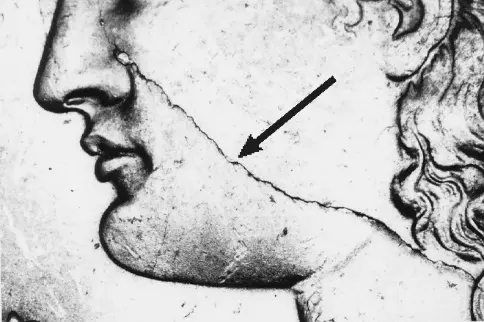
Top 100 1888-O Morgan Dollar VAM 1B Late Die State (aka Scarface) with a huge die crackk across Ms. Liberty's face.

Hot 50 1921-D VAM 1X with huge rim die break (aka cud)
Die breaks show up on coins as raised metal that has flowed into a crack or break in the die under the intense pressure of striking. Rim cuds are metal that flowed into a break on the edge of the die, and are seen as raised metal at the rim. These are considered more as die states — stages of a die’s working life, expressed as early die state (when it’s new) to late die state (when it is worn and may even be cracked or broken). There is a heavy premium for large die breaks and rim cuds on silver dollars. One need only look at the 1887 VAM-1A “Donkey Tail,” the 1888-O VAM-1A “Scarface,” and the 1891 VAM-2A “Moustache” varieties in Fey and Oxman (2009) Top 100 Morgan Dollar Varieties: The VAM Keys, Rare Coin Investments (RCI), Ironia, NJ to see examples of valuable die break silver dollars. The 1921-D VAM-1X “Doubled Rim Cud” in Jeff Oxman’s (2009) Official Guide to the Morgan Dollar Hit List 40, VAMstar Book Publishing, North Hills, CA book is a good example of a valuable rim cud.
Heavy-Premium Errors
Broad Strike
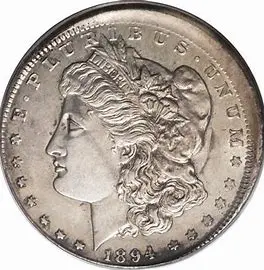
Example of an Uncentered Broad Struck Morgan silver dollar
If the planchet was not contained by the collar during striking, the metal spread out in all directions. These larger-than-normal Morgan silver dollars are desirable errors that command a heavy premium. The Morgan design can be centered or uncentered. When the design is missing is becomes an off-center strike.
Off-Center Strike
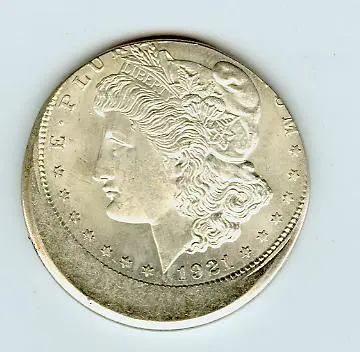
Example of a 20% 1921 off-center Morgan silver dollar
This occurs when the coin is struck outside the collar. Naturally, some of the reeding may be missing as well as some of the denticles. Typically, if the off-centering cuts into the lettering, the coin is considered off-center. The degree to which it’s off-center is usually described by percentage — 10% OC, 25% OC, 50% OC, etc. The more off-center, the greater the “WOW” factor and the higher the value. These errors are highly prized among collectors. Certification by a reputable grading service is highly recommended.
Double/Multiple Strike
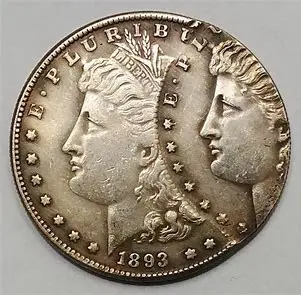
Example of a rare double struck Morgan Dollars
When a coin is not fully ejected after striking, double or even multiple strikes are possible. If the planchet rotates between strikes, this creates multiple images. These errors are very rare and highly prized among collectors. Certification by a reputable grading service is highly recommended.
Capped Die
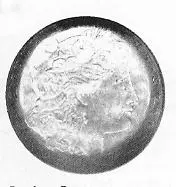
Example of a very rare Morgan dollar brockage
When a coin fails to eject after striking and another planchet feeds in on top of it and is struck, you can get what is called a capped die. The image on that side of the coin is blurred, and partially obliterated. This error is extremely rare.
Brockage
In the case of a capped die, when the design from the second strike is imparted into the first strike, it’s called a brockage. This error is also extremely rare and should be certified.
Problem, Counterfeit and Altered Morgan Dollars
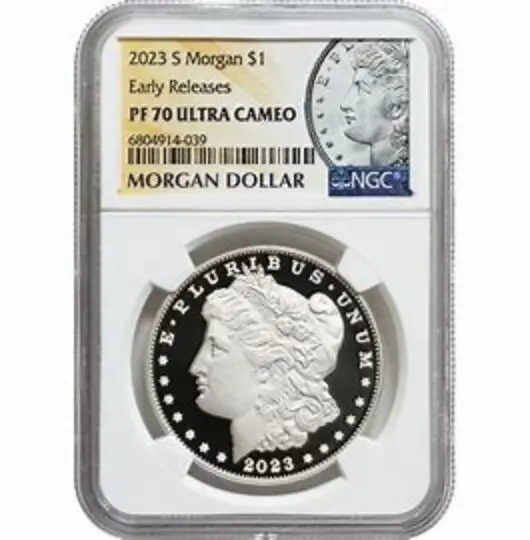
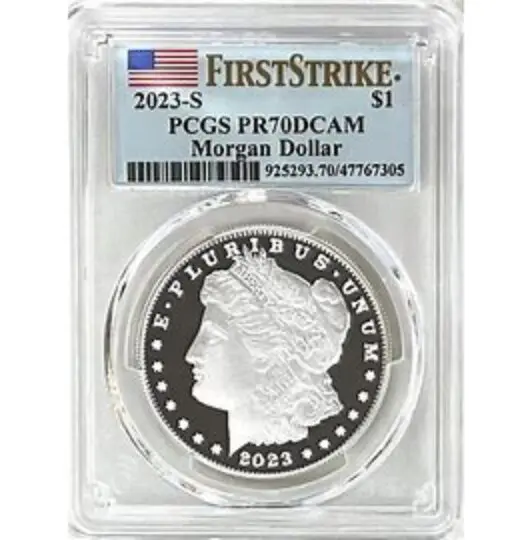
Examples of modern NGC and PCGS Certified holders
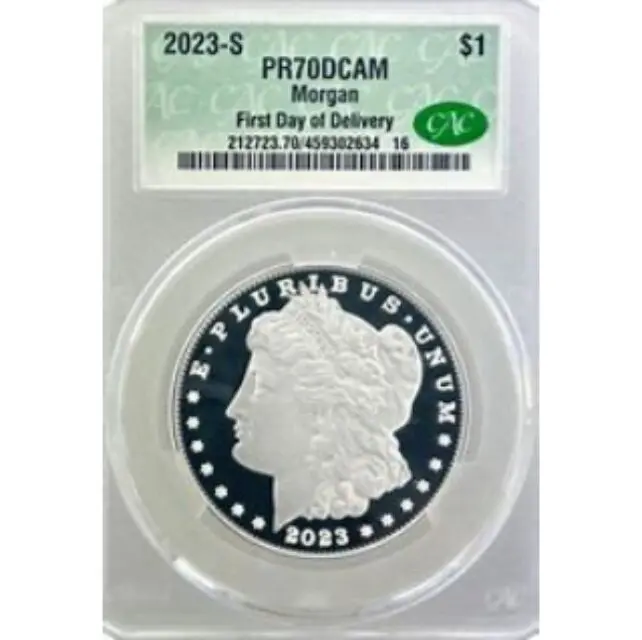
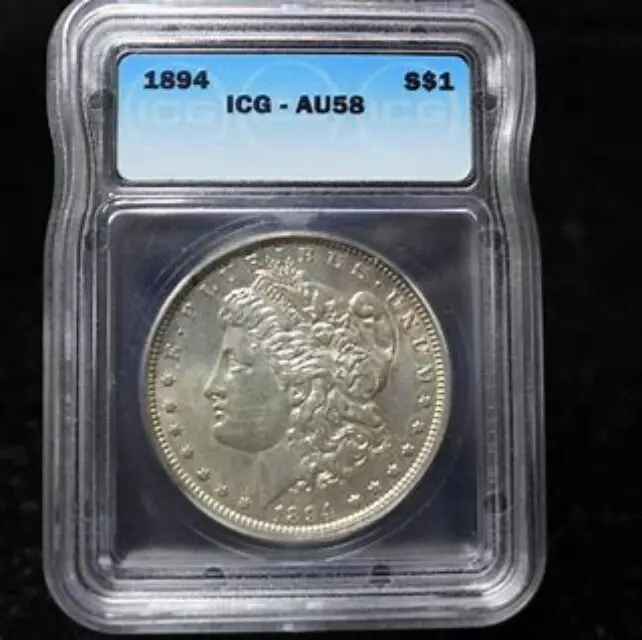
Examples of Consumer Acceptance Corp. (CAC) and Independent Grading Service (ICG) certified holders
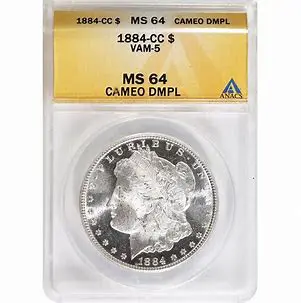
Example of ANACS certified holder
Morgan and Peace Dollar Certified Populations
There are a number of independent grading services, but silver dollars graded by Numismatic Guaranty Corporation (NGC, NGCCoin.com) and Professional, Coin Grading Service (PCGS, PCGS.com) and Consumer Acceptance Corporation (CAC) tend to command the highest prices when sold. Independent Coin Graders (ICG, ICGcoin.com) and ANACS (ANACS.com) also serve collectors but aren't always perceived by the coin market as accurate as the former. While grading fees may be less expensive for ICG and ANACS, the values they bring may be lower than the former grading services, although I've found many desirable and greater valued coins in their holders.
It is important to mention that the final arbiter in grading is agreement between a buyer and a seller. Having coins independently authenticated, graded and certified by an impartial third party such as PCGS, NGC or CAC helps facilitate making the decision to agree on price. Since the cost of grading in many cases is considerable, it is often impractical and a waste of money (a minimum of $20 and up, depending on the estimated value of your coin) to have your coins certified. A good general rule: Unless your coin is in the $300 price range or more, spending about 10% of its value on grading may not be warranted. Many silver dollars fit into this lesser-value category.
Certified Online Populations
An important way to determine the "relative rarity" of your silver dollars is to look at the online population reports from the grading services. Mintage alone may not account for the survival of a particular date or mint mark, as some of the Government Services Administration (GSA) releases from the 1960's-1980's of mint state and especially Carson City minted coins skew the survival rate of these dates. For example, despite the relatively low mintages of the desirable 1880 CC-1885-CC dates, many bags of mint state coins were released, making these dates much more available to collectors than the relatively low mintages and survival rate of other coins not released in the hoard would indicate.
Assessing Coin Scarcity
A good way to look at "relative rarity" is to add the total number of coins certified by the grading services (with the caveat that most coins valued under $300 would likely not be certified), with the coins graded in higher grades such as Mint State 60-70. Now, compare this to the 1881-S Morgan dollar, which is one of the more common dates found in Mint State and released in the GSA hoard, which was in the several hundreds of thousands. Then, ask yourself how many dealers, collectors, and investors are out there wanting one or more example of that date.
In this manner, you can study mintages, and study the relative rarity known for certified surviving examples and get a good statistical idea of just how rare the coin you have or are pursuing really is. This will help you make better purchase or selling decisions. This becomes especially important when considering the rarity of Morgan dollar proof-likes, deep mirror proof-likes, and rare die varieties.
The NGC certified population of Morgan dollars by date and mint mark can be found at: Morgan Dollars (1878-1921) | Coin Census Population Report | NGC. The PCGS certified population of Morgan dollars by date and mint mark can be found at: Morgan Dollar - PCGS Population Report
Morgan Dollar Rare Die Varieties (VAMS)
The SSDC and VAMworld.com are the best places to learn about Morgan and Peace silver dollar varieties. You can join the SSDC and list your Registry Set at: http://registry.ssdcvams.com/entry/.
The following is a historical video of the 1st VAMmaster Award to those who have made significant contributions to collecting silver dollar varieties.
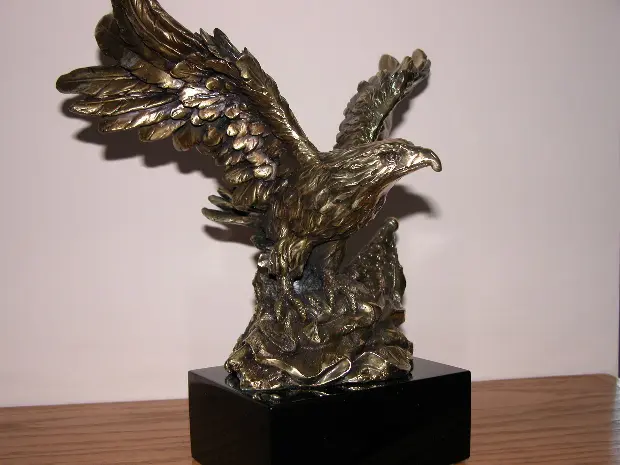
The coveted Society of Silver Dollar Collectors (SSDC) VAMmaster Award

Society of Silver Dollar Collectors (SSDC)
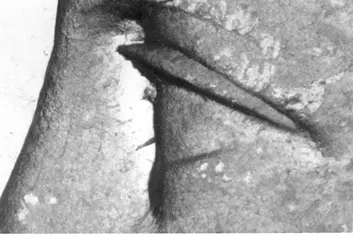
Close-up of a Top 100 1878 8TF VAM 14.11 “Wild Eye Spikes, a key to the 1878 8 Tail Feathers and the Top 100 Morgan dollar Varieties: The VAM Keys and a high premium variety.
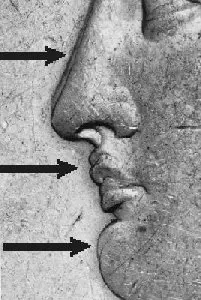
Close-up of a Top 100 1888-O VAM 4 “Hotlips”, a high premium variety
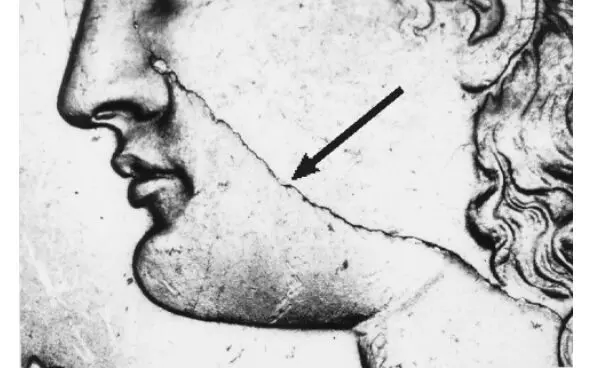
Close up of a Top 100 1888-O VAM B Late Die State “Scarface”, a high premium variety
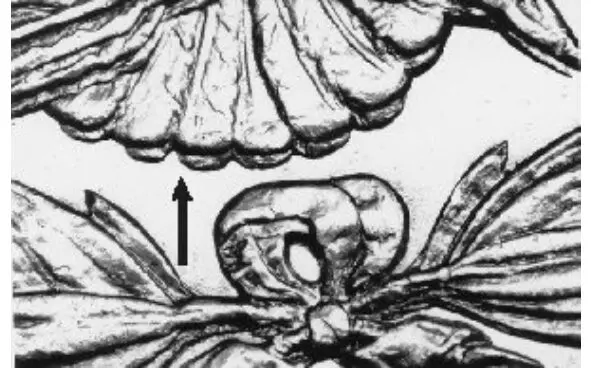
Close-up of Top 100 1901 VAM 3 7/7 Tailfeathers “Doubled Die Reverse”
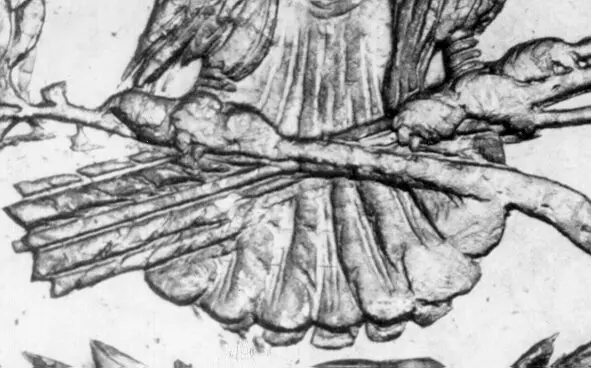
An example of a so-called 7/8 Tail Feather variety
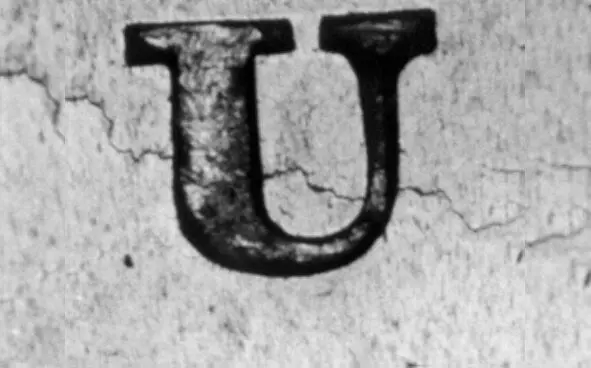
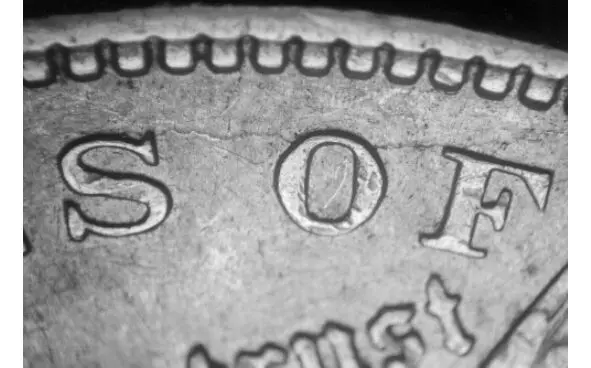
An example of a unique diagnostic die crack at the U of “Pluribus” on the obverse of a Morgan dollar that can help identify a particular VAM variety as well as diagnostic die cracks (like fingerprints) on the reverse of another Morgan dollar.
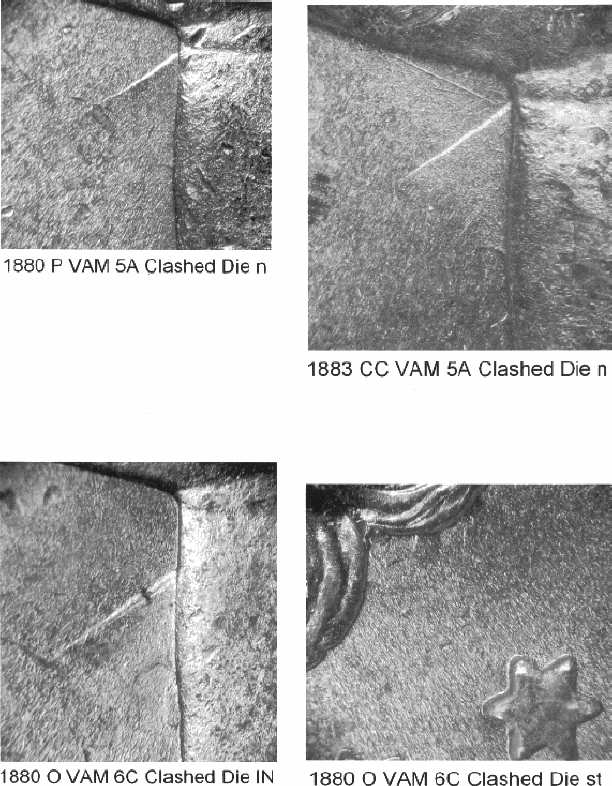
Examples of a single die clash (upper images) and double die clash (lower left) and letter transfer die clash from the reverse of a Morgan dollar
Cherry-Picking Rare Coins
Cherry-picking rare coins involves selecting coins that are undervalued or have unique characteristics that make them desirable to collectors. This can include coins with rare die varieties, minting errors, low mintage numbers, or historical significance. It’s important to have a good understanding of coin grading and market.
With publication of the Comprehensive Catalog and Encyclopedia of Morgan & Peace Silver Dollars (the VAM Encyclopedia) by Leroy Van Allen and A. George Mallis in 1971, the hunt for Morgan and Peace silver dollar rare die varieties was launched. This was not without precedent, as the hunt for rare die varieties of early copper cents and bust halves was already underway years earlier. There were a few thousand Morgan Dollar VAM varieties listed.
Indeed, the classic Red Book, A Guide book of United States Coins published from 1947 to date, listed about a dozen known Morgan dollar rare die varieties. The very successful coin book, Cherrypickers’ Guide to Rare Die Varieties by Bill Fivaz and J.T. Stanton published in 1990 listed about two dozen more desirable Morgan dollar varieties.
The VAM Encyclopedia was updated and expanded several times over the years as new die varieties were discovered. A small, but growing number of collectors started to follow Jeff Oxman, Founder of the Society of Silver Dollar Collectors (SSDC) who published an informative newsletter called “The SSDC Journal”.
The Top 100 Morgan Dollar Varieties
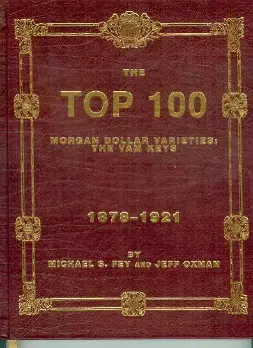
Morgan dollar collector, Michael S. Fey, Ph.D., became a devout follower of Jeff Oxman and considered him a mentor. In 1997, Fey and Oxman published the Top 100 Morgan Dollar Varieties: The VAM Keys. It was the first small format numismatic book that could fit into a collectors’ back pocket so that they could conveniently reference it while searching for silver dollars at a coin show. A special limited edition of 100 numbered and signed copies of an 8.5” x 11” leatherbound version with embossed gold inlay text, antique cover backing, and raised spines was also sold.
Market acceptance of the Top 100 was immediate and explosive, as the grading services started recognizing and certifying the Top 100 Morgan dollars.
Naturally, most Top 100 Morgan dollars were struck from one die pair, as opposed to as many as hundred or more die pairs for other Morgan dollars. Consequently, rare Morgan dollar variety populations were small as compared to populations of common and even key dates and mint marks. Prices for rare die varieties began escalating rapidly and like other series of Type coins (i.e. pennies, nickels, dimes, quarters and halves) some Morgan dollar rare die varieties quickly exceeded the price of key dates. Thus, the hunt was on to “Cherrypick” those Morgan dollar rare die varieties that were unknown or underappreciated by dealers.
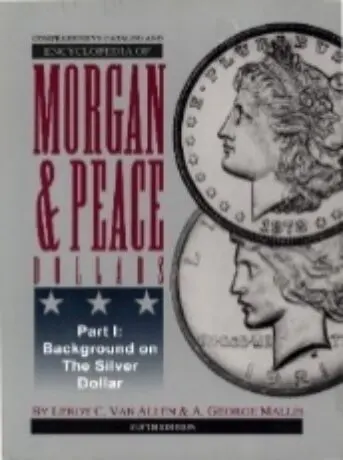
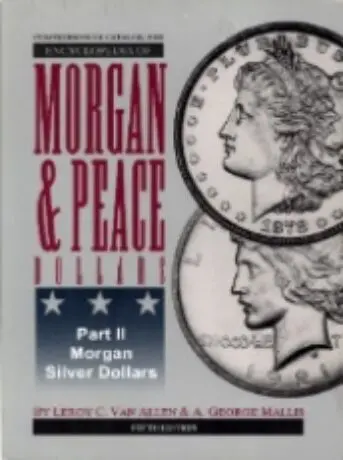
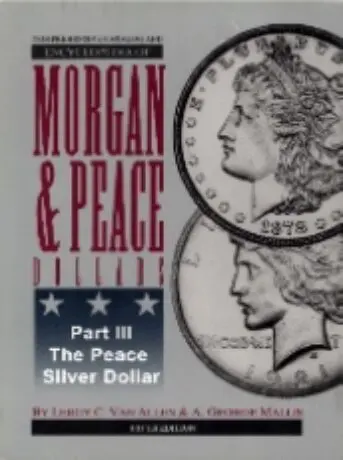
2021 Leroy Van Allen & George Mallis 5th edition 3 parts Comprehensive Catalog and Encyclopedia of Morgan & Peace Dollars


2025 Red Book A Guide Book of United States Coins; Volume I and II-Cherrypickers’ Guide to Rare die Varieties of United States Coins by Bill Fivaz and J.T. Stanton





The 1878 8-TF Morgan Dollar Guide
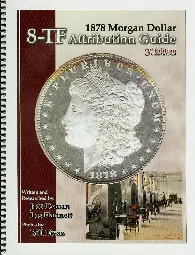
In 1998, Jeff Oxman and Les Hartnett published the 1878 Morgan Dollar 8-TF Attribution Guide. This spawned a search for the first Morgan Dollars struck which many variety collectors cherish because they were of a slightly higher relief and could often be seen with poof-like surfaces. They were some of the rarest, most beautiful Morgan dollar in the entire series.
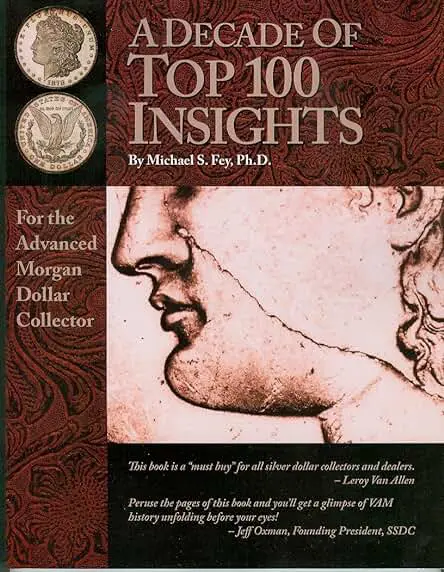
In the Summer 0f 2001, Fey started writing a quarterly newsletter, the Top 100 Insights. He provided a Top 100 Value Guide with each issue, and conducted annual Top 100 Ultra Rarities Auctions. After 10 years, he published A Decade of Top 100 Insights for the Advanced Morgan Dollar Collector. A Top 100 Morgan Dollar CD was released by Carlisle Development Corporation (www.carlisledevelopment.com), and became available as one of the earliest numismatic downloadable computer applications.
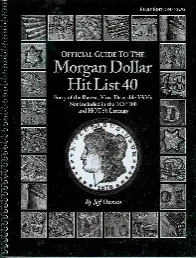
Oxman, in 1999 published the 1878 Morgan Dollar 7/8-TF Attribution Guide. This was followed in 2008 by the Official Guide to the Hot 50 Morgan Dollar Varieties by Oxman, and the Official Guide to the Morgan Dollar Hit List 40 in 2009. At this point, the grading services, dealers, collectors and investors, and the silver dollar market were searching, buying, and selling rare Morgan Dollar varieties.
However, it was 2005 when Morgan dollar varieties went public. Q. David Bowers, arguably the most famous numismatist of the time, published The Official Red Book, A Guide Book of Morgan Silver Dollars, a Whitman publication. Working with images provided by Fey, the book illustrated most of the Top 100 Morgan dollar varieties. This book would be sold in mass to in bookstores throughout the United States, thus bringing Morgan Dollar variety collecting to the general public.
Key References for Morgan Dollar Varieties
Other contributors to the growing thirst for knowledge about rare Morgan Silver dollar varieties included Dr. David Wang’s 2001 reference, A Guide to the 1879-s Reverse of 1878 Morgan Silver Dollars. Rob Joyce published Fun with 1921 Denver Morgan Dollars in 2003. John Roberts published a Guide to the 1878-S B1 Reverse Varieties in 2008, and A Guide to the Varieties of 1878 Carson City Morgan Dollars in 2010. Also in 2010, Adam Crum, Selby Ungar and Jeff Oxman published Carson City Morgan Dollars, an Official Whitman Guidebook.
Throughout this same period, John Baumgart created wonderful tutorial CD’s, 1878 8TF Wizard, 1878 7 TF Wizard, 1879s Rev ’78 Wizard, Hit List 40 Wizard, and the Hot 50 Wizard, which could teach a collector how to identify key features of a rare die variety literally overnight. He later formed a variety attribution service called VARslab, served as a SSDC President, head instructor of the Morgan Dollar Summer Seminar at the American Numismatic Association in Colorado Springs, and reviewer and publisher of the annual Morgan and Peace variety “Supplements” for the VAM Encyclopedia.
Baumgart is also the moderator of the SSDC VAMworld.com website, an excellent reference for Morgan and Peace silver dollar varieties. VAMWorld
Morgan & Peace Dollar Supply & Demand Considerations
Like most other items that are bought and sold, there’s a supply and a demand for that item. When demand exceeds supply, prices normally rise. And, when demand is low for a given item, prices tend to go down. When supply and demand are in equilibrium, the price remains stable.
Because only so many coins survived over the years in various grades, the supply is somewhat fixed. As new collectors join the hobby, and as silver, a precious metal increases in price, so does the price of a silver dollar. The Government Services Administration (GSA) release as well as the release of other hoards of silver dollars have skewed results for several dates and mint marks, especially in uncirculated grades such that the extant supply exceeds demand (numbers of collectors wanting one). Consequently, the price remains closely related to the spot price of silver.
Understanding Morgan Dollar Value
The result, for example, means that a silver dollar minted in 1880 in San Francisco, even in an average Mint State 63 condition can cost a relatively small percentage above the spot price of silver. However, a Mint State 63 of the Key Date 1893-S can cost many hundreds of thousands of dollars. The supply of this date is very small compared to the demand by collectors wanting to own one (refer to the section on Grading Services).
Fortunately, the release of hoards have allowed people to own one or more beautiful pieces of history, a 100+ year old silver dollar in mint condition for a relatively small sum of money over the spot price of silver.
Market Value of Proof-Like Coins
By reviewing the grading service population reports, one can analyze the “Relative Rarity” of a date and mint mark and its current market price. Doing so, one can quickly observe that proof-like and deep-mirror proof-like silver dollars have much lower extant populations because they were struck very early when dies were new, or newly repolished, and the proof-like die stage didn’t last very long before their mirror-like appearance wore off. Further, some dates at the various mints were polished more often than others, making a case for even rarer date and mint mark proof-likes. Higher prices are normally seen for these coins as they are flashy and in greater demand than later non-mirror or satiny die states.
Morgan dollar varieties were normally struck from one die pair rather than, for example, more than 100 die pairs for another date and mint mark combinations. In addition, some Morgan dollar varieties were struck as rare die states, either early deep mirror proof-like before the die pair was broken or retired or very late terminal die states, when the die was breaking apart. Consequently, the populations of these are relatively low compared to their current price. As more collectors discover these interesting dollars with a “wow” factor when one sees one, demand and prices are expected to rise (refer to the section on Morgan Dollar varieties).
Morgan & Peace Dollar Pricing Considerations
When buying or selling silver dollars, it’s what a buyer is willing to pay, and what a seller is willing to accept. This goes for raw, uncertified silver dollars as well as certified. Certification by a reputable grading service helps with the negotiation process because it makes any differences in how each party grades less of a question.
Once each party agrees on a grade, the only difference is what is a fair price that both parties can agree to. Often, dealers have a little room and can offer their silver dollar for a reduced price to market, but what is market?
A first consideration is what is the spot price of silver, which changes from minute to minute. Morgan and Peace Silver dollars contain about 0.77 of an ounce of silver if not excessively worn. A next consideration is, are you buying wholesale or retail? Another consideration is, how rare is the coin? How hard would it be to find a replacement? And, of course, what is the eye appeal of the coin? Is it a beautiful black and white cameo? Does it have extraordinary toning making it beautiful to behold? Factors such as these can make a silver dollar trade for many multiples of its market price.
Sources for Coin Pricing Information
One source of suggested wholesale dealer buying price is the current yearly The Official Blue Book. Handbook of United States Coins by R.S. Yeoman, edited by Jeff Garrett, Whitman Publishing, LLC. It’s important to note that this book is published once a year, and both silver and numismatic premium prices can change dramatically in a year.
A popular source of suggested retail prices for silver dollars is the current yearly, The Official Red Book. A Guide to United States Coins, R.S. Yeoman, edited by Jeff Garrett, Whitman Publishing, LLC. Like the Blue Book, it’s important to note that this book is published once a year, and both silver and numismatic premium prices can change dramatically in a year. The Red Book is perhaps the most popular book ever published for coins, as it has been published annually since 1947.
For more current information, you can access the many ‘buy” price lists published by dealers simply by doing a routine internet search. eBay is a good way to see what a particular silver dollar date, mint mark, raw uncertified, certified, variety, and error in various grades might trade for. Care should be taken to click to the right of the search bar for the “advanced” search, then click on completed auctions, which will show up in a green color. This is the actual price, less eBay’s commission which may be about 10% and shipping and insurance, if born by the dealer or collector, “actually sold” instead of the “asking price” in the auction listing.


Coin Collecting and Numismatics: American Numismatic Association
Our best advice is if you have a large collection of silver dollars, first DO NOT TRY TO CLEAN YOUR COINS! You would most certainly be harming the value of the fragile original surface layer of your coins, which would substantially reduce their value. Collectors do not want coins that have been cleaned or polished. Next, seek the help of one or more numismatic professionals who adhere to a Code of Ethics. Reputable appraisers can be found by doing a dealer search at the American Numismatic Associations’s web site, or by searching a listing of reputable dealers at the Institute of Silver Dollar Education and Research’s web site.