1794-1797
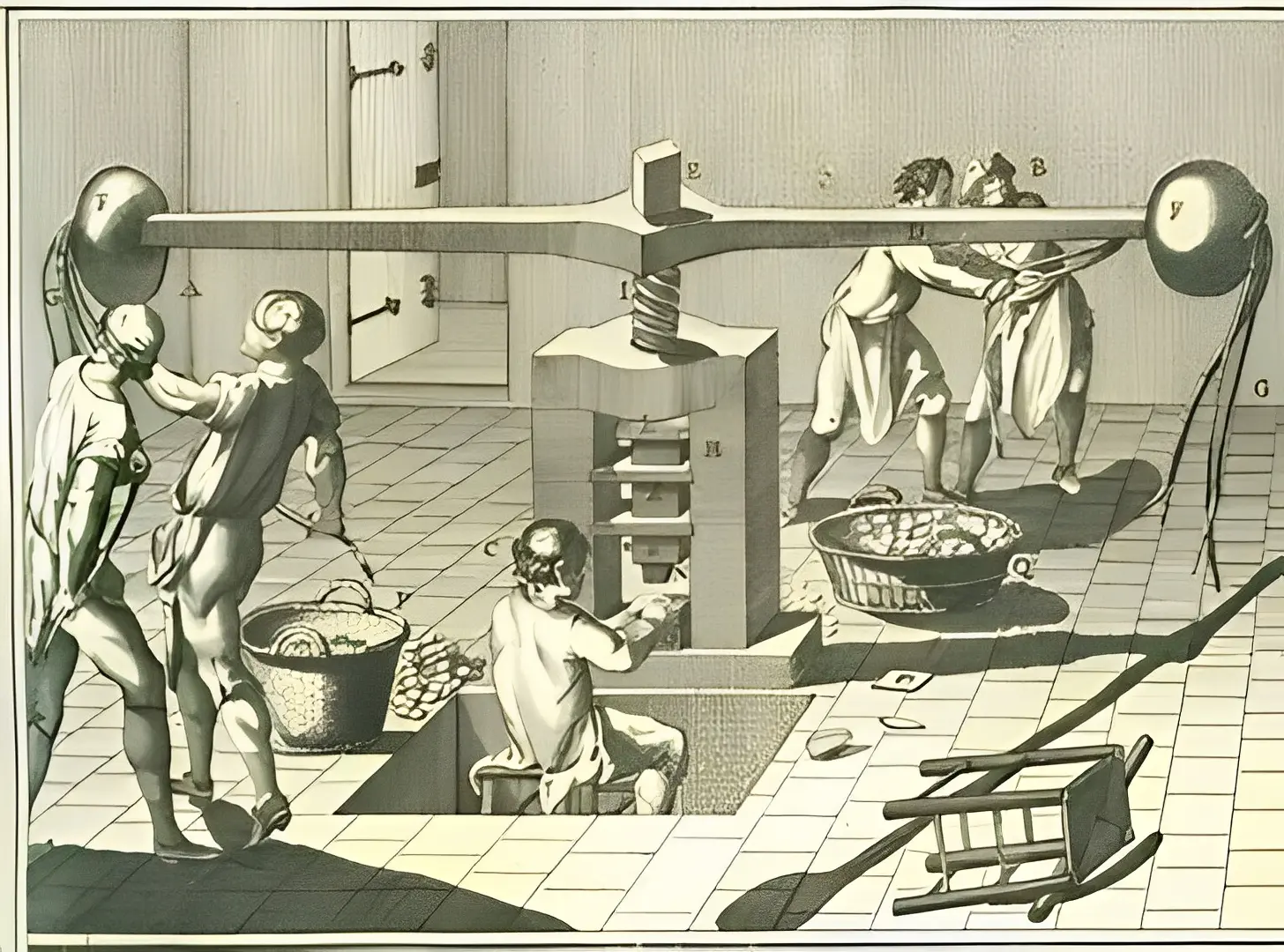
Example Screw Press Used to Strike Early Silver Dollars
Bust Silver Dollar Public Education
1794-1804
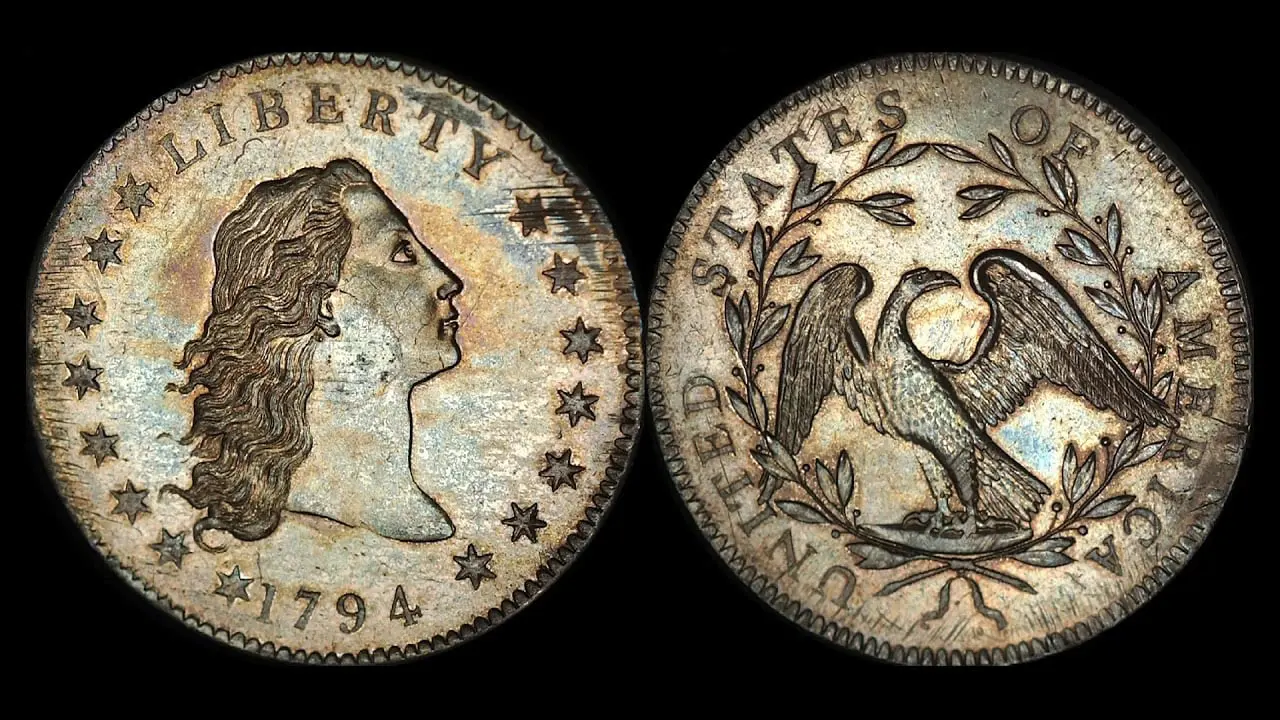
The 1794 flowing hair silver dollar was the first silver dollar minted by the Philadelphia mint. It had a silver weight of 0.8924 fine, not quite 1 ounce, and weighed 26.96 grams. It was designed by mint engraver Robert Scott. Genuine 1794 silver dollars have the value, “HUNDRED CENTS ONE DOLLAR OR UNIT” stamped into the edge of the coin.
The scant mintage of 1758 pieces means that this silver dollar is extremely valuable in any grade and must be certified. Low grade examples can bring in excess of $40,000, while mint state examples can bring in excess of $1 million dollars.
Identifying Rare Coin Characteristics
Some examples may contain an original silver plug, which was added by the mint to bring the weight of a light planchet to mint tolerance. Because of the high value of this date, numerous counterfeits and copies exist. Certification by a reputable grading service to ensure a genuine specimen is necessary. Some examples may show parallel lines on either the obverse or reverse. These are called adjustment marks, whereby the mint used files to bring overweight silver planchets into mint weight tolerance.
Silver dollars dated 1795 had a mintage of 160,295. They were made with two leaves below the eagle’s wings, and with three leaves below the wings, with the former being slightly more valuable. Specimens have been found with silver plugs, as with the 1794 dollar. Like the 1794, many counterfeits and copies exist. Certification by a reputable grading service is necessary to ensure a genuine mint product. Original mint adjustment file marks may be seen.
Different Varieties
Many different varieties of the 1795 exist, some with six to as much as nine berries on the left reverse and six to ten berries on the right reverse. Some of the 20 different known varieties are relatively common, while some are excessively rare. Certification by Bolander die variety is highly recommended as prices of the rarer varieties can command multiples of the common price.
A good reference to determine which Bolander variety you have is the 1999 Jules Reiver reference, The United States Early Silver Dollars 1794-1803. Or, consultation with a reputable and knowledgeable coin dealer can be helpful.
Flowing hair dollars are collected by Type, normally a single 1795 dollar, perhaps with a two leaf and a three leaf reverse, but there are some variety collectors who are trying to assemble a complete variety set. The 1794 Flowing Hair dollar is a numismatic prize. Only those with the means to make a purchase can ever expect to own an example.
Certification and authentication by a reputable grading service or consultation with a reputable and knowledgeable dealer or numismatic specialist is mandatory.
1796-1804
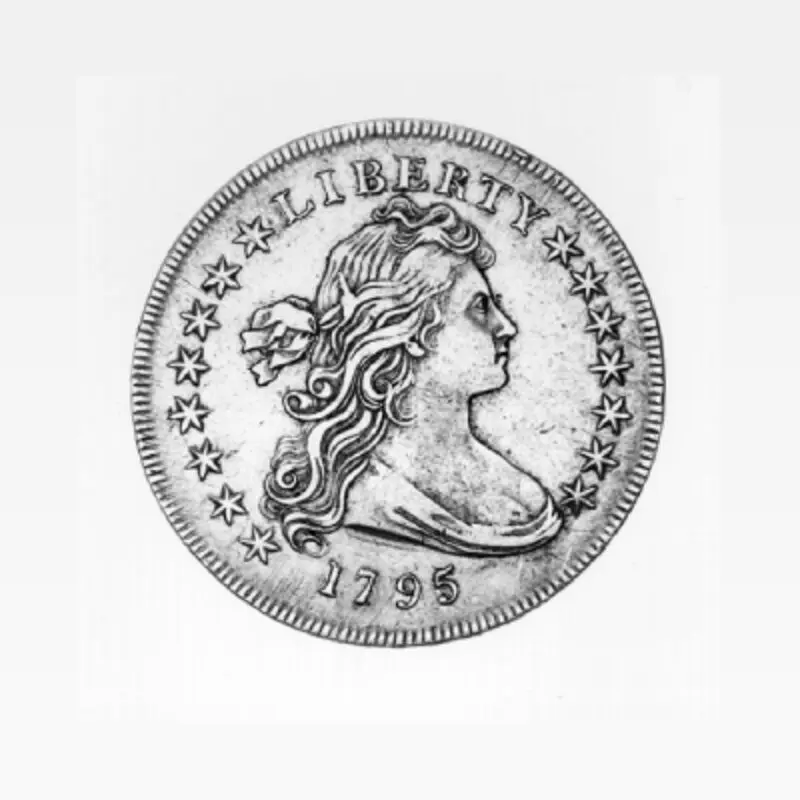
The Draped Bust designs were minted from 1796 to 1798 with a small eagle reverse. Mintages were 79,920, 7,776 and 40,000 respectively. Like the 1795 dollar, varieties exist with small and large dates, small and large letters, and different arrangement of stars on the obverse. Some were made with 13 stars and some with 15 stars. There are six different varieties known for 1796, 3 different for 1797, and 33 different varieties known for 1798. Some varieties are much rarer than others and can command multiples of common variety price. Certification and authentication by Bolander variety by a reputable grading service is highly recommended (see the Reiver book above).
Mintages for 1799 to 1803 dollars as well as known varieties are given below:
| 1799 | 423,515 | 23 |
| 1800 | 220,920 | 20 |
| 1801 | 54,454 | 5 |
| 1802 | 41,650 | 9 |
| 1803 | 85,634 | 7 |
The Draped Bust design was paired with a new Heraldic Large Eagle reverse from 1799 to 1803. There are numerous varieties known, with some being rarely encountered. These rare die varieties can bring multiples of prices than common examples. Certification by Bolander number by a reputable grading service is recommended as many counterfeits or copies exist. (see the Reiver book above). Consultation with a reputable and knowledgeable dealer or numismatist is highly recommended.
Ultra-rare Proofs and Novadels of all of the above early dollars may exist. These are highly prized by dealers, collectors and investors. Certification by a reputable grading and authentication service is mandatory, as some of these may be valued in excess of $1 million dollars.

Flowing Hair

Small Eagle
Bust Design

Heraldic Eagle
1804 Silver Dollar
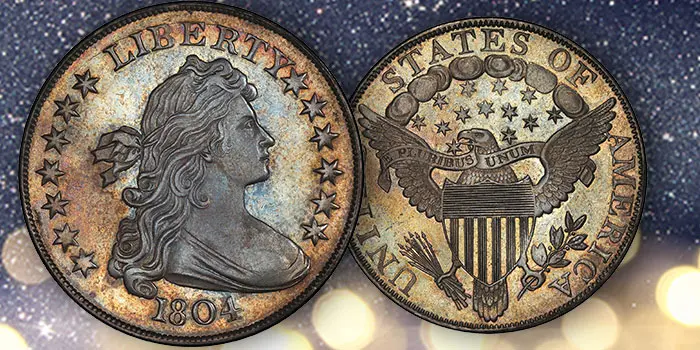
Long considered the King of U.S. coins, only 16 examples were struck, likely many years after 1804, as gifts to dignitaries in foreign countries. All genuine examples are known and accounted for. Numerous counterfeits and copies exist. Certification and authentication by a reputable grading service is mandatory.
In the year 2000, at a Bowers and Merena auction, the finest known Class I specimen, now a PCGS Proof 68, from the Walter Child’s collection was the first coin to break the million dollar mark selling for $4.14 million dollars. Three classes of 1804 dollar are known. Eight examples of the original Class I strike are known, while seven restrikes are known to exist. These are classified by variety from Class I (O above clouds) to Class II (O above space between the clouds; plain edge with 1 known), and Class III (O above space between the clouds; with a lettered edge-7 known).
In 2001, the same Child’s example from the Brent Pogue collection sold for $7.68 million at a Stack’s Bowers Gallery auction. Today, the same coin might fetch multiples more.
A comprehensive reference of the fascinating story of the 1804 dollar was given by Eric P. Newman and Kenneth E. Bressett (2009), The Fantastic 1804 Dollar Hardcover (Tribute Edition).
A good recap of the history of the 1804 dollar is given in 1999 by Ed Reiter at the PCGS website The Real 1804 Silver Dollars.
The Draped Bust/Heraldic Eagle design is normally collected by Type, with some collectors assembling one of each date. Collecting by variety is far more challenging, with many ultra-rare die varieties of the series. Only the very wealthy can ever hope to own the 1804 dollar, thus making it the ultimate stopper to collecting a set of all dates and varieties. Likewise, collecting a set of proofs/novadels is prohibitively expensive.
Certification and authentication by a reputable grading service or consultation with a reputable and knowledgeable dealer or numismatic specialist is mandatory.